


Map of Indian Art Forms
There is so much to see and do in India, from ancient temples to vibrant markets, it's easy to get overwhelmed by all of the different things to do. However, one of the most neglected part of Indian culture(s) in modern times is its folk art, also known as tribal art or village crafts depending on the community that practices it.
What is Indian folk art? Indian Folk Art is a body of art form that originated and/or developed in India. Some of the forms are rock paintings, textiles, sculptures and other a diverse range of surface paintings made by various tribal and cultural groups for religious or social reasons.
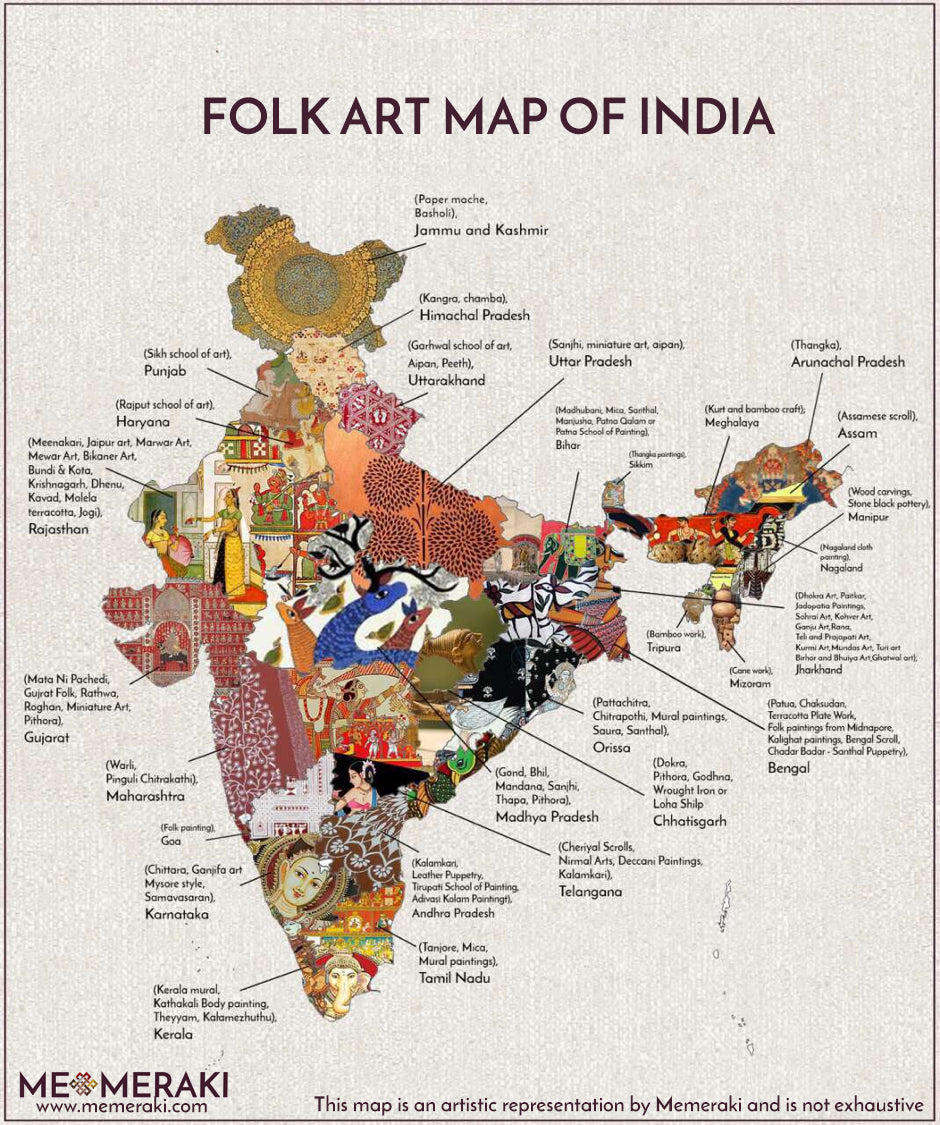
Here's the list of all Folk Art Crafts & Paintings:
| State/Union Territory | Folk Art Forms |
| Leh Ladhakh |
|
| Sikkim |
|
| Punjab |
|
| Arunachal Pradesh |
|
| Haryana |
|
| Nagaland |
|
| Goa |
|
| Karnataka |
|
| Assam |
|
| Jammu and Kashmir |
|
| Maharashtra |
|
| Tamil Nadu |
|
| Uttar Pradesh | |
| Himachal Pradesh |
|
| Uttarakhand |
|
| Kerala |
|
| Dadra and Nagar Haveli |
|
| Daman and Diu |
|
| Lakshadweep |
|
| Manipur |
|
| Meghalaya |
|
| Mizoram |
|
| Tripura |
|
| Sikkim |
|
| Puducherry |
|
| Andhra Pradesh |
|
| Telangana |
|
| Odisha |
|
| Bihar |
|
| Chattisgarh |
|
| Gujarat |
|
| Madhya Pradesh | |
| Bengal |
|
| Jharkhand |
|
| Rajasthan |
|
Indian folk art, with its diverse styles and techniques, reflects the collective history, traditions, and aspirations of communities. It showcases the creative intellect of people and their intelligence in adapting indigenous resources into expressive art forms. These art forms, rooted in the daily lives and rituals of the people, not only preserve cultural narratives but also celebrate the resourcefulness and artistic ingenuity of local communities.
There are art forms that go back thousands of years, and feature belief in gods, goddesses and powerful spirits. The magic and mystic of India comes alive through these crafts, which have been passed down for centuries. If you're interested in ancient folklore, mythology and religion, Indian folk art is the perfect choice for you!
For the first time in India, learn traditional Indian folk art and crafts at MeMeraki from anywhere in the world. Wether you are in India, Japan, France, or the UK, learn step by step how to draw various designs and make unique works of art on your own - all online!
The best way to learn Indian folk art is by taking a masterclass (Click here) taught by generational Indian artists. The art or craft you choose is up to you – there are many options! See —> Live Art Workshops
FAQ’s
Q1: What is Indian folk art and how does it differ from fine art?
Indian folk art refers to traditional artistic expressions rooted in the daily lives, rituals, and myths of tribal and rural communities. Unlike formal fine art, it often uses natural pigments and focuses on communal storytelling, representing the rich Indian cultural heritage passed down through generations.
Q2: Which states are famous for traditional Indian art forms?
India has a diverse landscape of art. For instance, Bihar is known for Madhubani painting, Maharashtra is famous for Warli art, and Odisha is the home of Pattachitra art forms. Our comprehensive map covers traditional Indian crafts by state from Jammu and Kashmir to Kerala.
Q3: How many different folk art forms exist in India?
While there are hundreds of documented art forms, our directory highlights over 150 unique crafts and paintings. Every state and Union Territory in India boasts its own distinct style—from the Thangka paintings of the Himalayas to the Kerala Murals of the south.
Q4: Why is it important to preserve these art forms today?
A: Many of these traditions are "living histories" passed down through generations. Preserving them ensures that ancient folklore, mythology, and indigenous techniques aren't lost to modernization. Furthermore, supporting these arts provides sustainable livelihoods for traditional artisan communities.
Q5: Can I learn these traditional arts if I don't live in India?
Yes! Through platforms like MeMeraki, you can access online masterclasses taught by generational Indian artists from anywhere in the world (Japan, France, USA, UK, etc.). These courses offer step-by-step guidance on traditional designs and techniques.
Q6: What are some of the most famous Indian folk paintings?
Some of the most globally recognized forms include:
- Madhubani (Bihar): Known for vibrant colors and geometric patterns.
- Warli (Maharashtra): Minimalist tribal art using basic geometric shapes.
- Pattachitra (Odisha/West Bengal): Intricate cloth-based scroll paintings.
- Gond (Madhya Pradesh): Famed for its use of dots and lines to create rhythmic textures.
Q7: What materials are traditionally used in these paintings?
Historically, artists used indigenous resources. This includes natural pigments derived from stones, minerals, leaves, and flowers. Brushes were often made from bamboo sticks or bird feathers, and the "canvas" ranged from mud walls and floors to handmade paper and treated cloth.
Q8: Are these art forms strictly religious?
While many forms are rooted in Hindu mythology or spiritual rituals (like Sanjhi or Thangka), many others depict daily village life, harvest celebrations, and nature. They are a reflection of the community's entire ecosystem, not just their faith.


