Terracotta
What is Terracotta Art?
Terracotta Art is a traditional art form made from natural clay, shaped by hand and hardened through firing. It is one of the oldest forms of artistic expression in India, with roots tracing back to the Indus Valley Civilization. Terracotta art is especially known for its earthy colours, detailed craftsmanship, and strong connection to nature, mythology and daily life. Traditionally used for pottery, figurines and temple decoration, it has evolved into a widely appreciated decorative and sculptural art form. Today, terracotta continues to blend tradition with modern aesthetics while preserving its cultural significance.
Key Features of Terracotta Art
Rich in symbolism and tradition, terracotta art transforms natural clay into expressive forms. Some defining features of this art form include:
Intricate Handcrafted Detailing
Earthy Natural Colours
Nature-Centric Themes
Depictions of Mythology and Folk Traditions
Relief-Based and Sculptural Forms
Symbolism of Fertility and Prosperity
Traditional Firing Techniques
Regional Folk Craft Influences
Strong Cultural and Ritual Significance
Storytelling Through Form and Texture
History of Terracotta Art
Origin of Terracotta Art
Terracotta art, derived from the Latin words for "baked earth", originated in ancient India as a vital form of expression during the Indus Valley Civilization. Traditionally crafted by local potters from riverbed clay, these early items, ranging from mystical Mother Goddess figurines to votive animals like the famous Bankura horses, served spiritual and utilitarian roles in rural communities and temple rituals.
Evolution of Terracotta Art
The transition of terracotta from simple folk pottery to monumental architectural art expanded significantly under regional dynasties, notably reaching its zenith in 17th-century Bengal. Artisans began using clay tiles to construct intricate, narrative-driven temple facades. By the mid-20th century, government patronage and cultural revivalists helped rural craft clusters bring this clay medium into mainstream urban design and modern sculpture.
Contemporary Terracotta Art
Today, terracotta is recognized as one of India's most resilient and versatile craft traditions. Contemporary artisans and studio potters continue to honor ancient baking and smoky-firing techniques while reimagining the clay into minimalist home decor, elegant landscape murals, and eco-friendly architectural elements designed to suit global galleries and modern minimalist interiors.
Terracotta Art Themes and Motifs
Terracotta art reflects a rich visual language rooted in nature, spirituality and folk traditions. Unlike painted art forms, terracotta expresses these themes through relief, texture and sculptural form. The common themes and motifs in this artform reveal a strong emphasis on harmony between the natural world, divine symbolism and decorative storytelling.
Floral and Botanical Motifs
Lotus flowers, vines, leaves and blooming branches appear repeatedly in wall panels and plaques, symbolising purity, growth and fertility. These motifs often create rhythmic and symmetrical compositions, showing a close observation of nature and its decorative possibilities.
Birds and Animal Forms
Birds are often shown perched among flowers or in pairs. Peacocks, owls, sparrows and fish are especially common. In terracotta tradition, these animals carry symbolic meanings, peacocks represent beauty and grace, owls wisdom and protection, fish abundance and prosperity. Their presence highlights the close relationship between folk art and natural life.
Divine and Feminine Imagery
Feminine forms and goddess-like figures are often surrounded by floral or symbolic elements. These representations reflect themes of fertility, motherhood, protection and spiritual power. The emphasis on feminine energy, shakti, connects terracotta art with ritual traditions and devotional practices.
Rural Life and Folk Traditions
Terracotta often draws from the rhythms of village life and local customs. Certain pieces reflect traditional folk aesthetics, including musicians, dancers and symbolic domestic scenes. These motifs preserve everyday cultural experiences and celebrate community life.
Symbolic Geometry and Decorative Borders
Geometric patterns, circular forms and repeated borders are common across the collection. These motifs provide structure and balance while enhancing the tactile beauty of the clay surface. They also reflect traditional craft practices where repetition creates harmony and visual rhythm.
Materials Used in Terracotta Art
Traditionally, terracotta artisans rely on locally sourced, fine-grained alluvial clay or silt collected from riverbeds, ponds and lakes. To prevent cracking during the firing process, the raw clay is mixed with organic materials such as rice husk, sand and cattle manure. While traditional potters still use natural firewood, straw and dry leaves for baking, contemporary studio potters often use modern electric or gas kilns alongside specialized carving tools to achieve high precision.
Colours Used in Terracotta Art
Natural Reddish-Brown: Produced naturally by the rich iron oxide content in the clay when it reacts with oxygen during the open-air firing process
Velvety Black: Achieved through a specific reduction-firing technique where the kiln is completely sealed with smoke and organic matter, starving the clay of oxygen and turning the red surfaces to deep black
White: Historically sourced from khari mati (chalk or white clay) or ground limestone, used to paint intricate details onto dried figurines
Ochre and Yellows: Derived from naturally occurring yellow clays or marls, applied as a slip (liquid clay) before firing
Grey and Earth Tones: Created by mixing different types of silt or varying the baking temperature, to provide depth and highlight the raw texture of the sculpted clay
How Terracotta Art is Made
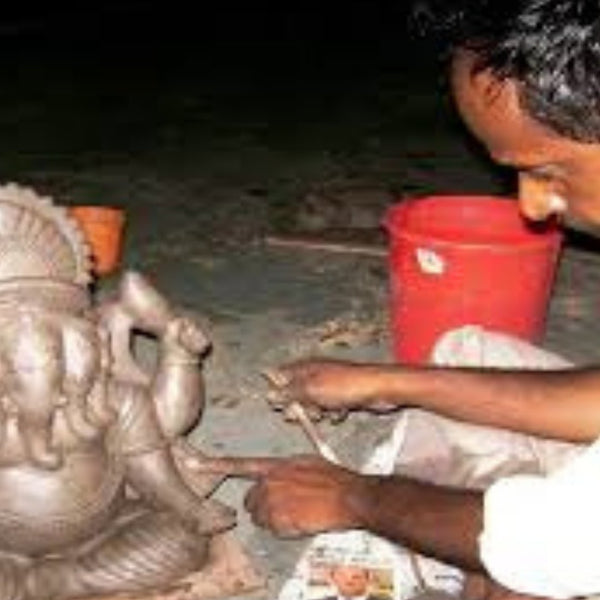
The creation of terracotta art begins with clay preparation. Artisans knead and stomp the wet clay by hand or foot to remove air bubbles and achieve uniform elasticity. The forms are then sculpted using a combination of hand-modeling, wooden molds or shaping on a traditional potter's wheel. Once the basic structure is built, the artist adds delicate surface detailing using wooden slappers, carved stamps and incising needles. The molded piece is left to dry naturally in the shade for several days, then baked in the sun, and finally loaded into an open-pit kiln. Here, it is fired at temperatures ranging between 700°C to 900°C, a process that chemically transforms the soft clay into durable, porous ceramic art.
Famous Terracotta Artists
Dinesh Molela
Dinesh Molela belongs to the renowned Molela tradition of Rajasthan, famous for its terracotta plaques and devotional icons. His works primarily depict deities, folk legends and ritual figures, continuing a craft tradition passed down through generations. Through his detailed relief work, he preserves the sacred and ceremonial significance of Molela terracotta art while adapting it for wider audiences.
Dolon Kundu
Dolon Kundu is known for her intricate wall panels inspired by birds, flowers, fish and divine feminine imagery. Her works are characterized by delicate relief detailing, rhythmic floral patterns and strong folk aesthetics rooted in the terracotta traditions of West Bengal. She combines traditional craftsmanship with contemporary decorative appeal, making terracotta accessible to modern homes.
Kailash Devi
Kailash Devi is known for her handcrafted terracotta sculptures and decorative pieces that often draw from themes of village life, spirituality and natural forms. Her works reflect the traditional role of women in sustaining clay-based crafts and preserving local artistic practices. Through her terracotta creations, she contributes to the continuity of folk art traditions while introducing personal artistic expression.
Ramjatan Prajapati
Ramjatan Prajapati is a traditional clay artist associated with folk terracotta practices in India, creating works that range from ritual objects to decorative sculptures. His art often emphasizes animals, symbolic forms and cultural motifs, reflecting the close relationship between terracotta and everyday community life. His craftsmanship represents the enduring legacy of hereditary pottery and clay traditions in India.
Terracotta Art for Home Decor
Terracotta Art has become a popular choice for home decor because of its earthy textures, handcrafted appeal and timeless aesthetic. Featuring motifs such as floral vines, birds, divine figures, fish and nature-inspired reliefs, these artworks bring warmth, depth, and a sense of tradition into both modern and rustic interiors. The natural clay tones create an organic elegance that blends easily with different styles of decor.
Whether displayed in living rooms, entryways, bedrooms, balconies, kitchens, study areas or prayer corners, terracotta pieces add character and cultural richness to a space.
Displayed as individual artworks or paired with various pieces in a gallery wall setting, their sculptural quality and tactile detailing make them unique focal points, while their strong connection to folk traditions and natural symbolism allows homeowners to incorporate art that is both decorative and meaningful into their surroundings.
Terracotta Art for Gifting
Terracotta art pieces make meaningful gifts for weddings, housewarmings, anniversaries, festive occasions and special celebrations. Rooted in tradition and handcrafted with care, these artworks carry a timeless charm that combines cultural heritage with artistic beauty, making them thoughtful gifts for art lovers and collectors alike.
Popular motifs such as lotus flowers, birds, fish, and divine figures are often associated with prosperity, protection, harmony, and abundance. Whether gifted as wall panels, decorative plaques or sculptural pieces, terracotta art offers a unique blend of craftsmanship, symbolism and cultural significance, making it both a personal and lasting gift.
FAQs About Terracotta Art
What is Terracotta Art famous for?
Terracotta Art is famous for its earthy textures, handcrafted detailing and sculptural beauty. Rooted in one of India’s oldest artistic traditions, it is known for depicting floral motifs, birds, animals, divine figures and folk-inspired narratives. Its natural clay tones and tactile relief work make it distinctive among traditional Indian art forms.
Does Terracotta Art have a GI Tag?
Yes, several regional terracotta craft traditions in India have received Geographical Indication (GI) recognition, helping preserve their authenticity and support artisan communities.
What types of Terracotta Art can I buy?
Terracotta art is available in a variety of forms, including wall panels, plaques, figurines, sculptures, decorative masks, ritual icons and home decor pieces. Common themes include floral designs, birds, fish, goddess imagery, rural life scenes and nature-inspired motifs. These artworks come in different sizes and styles suitable for homes, offices and personal collections.
Is Terracotta Art suitable for home decor and gifting?
Absolutely. Terracotta art is a popular choice for living rooms, entryways, balconies, dining spaces and prayer corners because of its warm earthy tones and handcrafted character. Its symbolic themes of prosperity, fertility, protection, and harmony also make it a meaningful gift for weddings, anniversaries, housewarmings and festive occasions.
Where can I buy authentic Terracotta Art online?
MeMeraki's Terracotta Collection features authentic handcrafted artworks created by skilled terracotta artisans from across India. From floral wall panels and bird motifs to goddess-inspired reliefs and folk decorative pieces, the collection showcases the richness, versatility and cultural heritage of Indian terracotta art.
Whether you are looking to buy traditional terracotta wall decor, nature-inspired clay art, symbolic sculptural pieces or contemporary handcrafted terracotta artworks, these timeless forms make terracotta a distinctive choice for home decor, gifting and art collections.