Featured on Architectural Digest and Elle Decor ◆ 20,000+ Happy Customers ◆ Secure World Wide Shipping ◆ 4.8 Stars on Google ◆ 300+ Artforms ◆ Authentic Handmade Artworks ◆ Personalised Customer Support ◆ Authenticity Certificates ◆ Featured on AD and Elle Decor ◆ 20,000+ Happy Customers ◆ Secure World Wide Shipping ◆ 4.8 Stars on Google ◆ 300+ Artforms ◆ Authentic Handmade Artworks ◆ Personalised Customer Support ◆ Authenticity Certificates ◆ Featured on AD and Elle Decor ◆ 20,000+ Happy Customers ◆ Secure World Wide Shipping ◆ 4.8 Stars on Google ◆ 300+ Artforms ◆ Authentic Handmade Artworks ◆ Personalised Customer Support ◆ Authenticity Certificates ◆ Featured on Architectural Digest and Elle Decor ◆ 20,000+ Happy Customers ◆ Secure World Wide Shipping ◆ 4.8 Stars on Google ◆ 300+ Artforms ◆ Authentic Handmade Artworks ◆ Personalised Customer Support ◆ Authenticity Certificates ◆ Featured on Architectural Digest and Elle Decor ◆ 20,000+ Happy Customers ◆ Secure World Wide Shipping ◆ 4.8 Stars on Google ◆ 300+ Artforms ◆ Authentic Handmade Artworks ◆ Personalised Customer Support ◆ Authenticity Certificates ◆ Featured on Architectural Digest and Elle Decor ◆ 20,000+ Happy Customers ◆ Secure World Wide Shipping ◆ 4.8 Stars on Google ◆ 300+ Artforms ◆ Authentic Handmade Artworks ◆ Personalised Customer Support ◆ Authenticity Certificates ◆ Featured on Architectural Digest and Elle Decor ◆ 20,000+ Happy Customers ◆ Secure World Wide Shipping ◆ 4.8 Stars on Google ◆ 300+ Artforms ◆ Authentic Handmade Artworks ◆ Personalised Customer Support ◆ Authenticity Certificates ◆ Featured on Architectural Digest and Elle Decor ◆ 20,000+ Happy Customers ◆ Secure World Wide Shipping ◆ 4.8 Stars on Google ◆ 300+ Artforms ◆ Authentic Handmade Artworks ◆ Personalised Customer Support ◆ Authenticity Certificates
Your walls deserve better art.
Get 10% off on Ready to Ship Artworks
Delivered in just 3–4 days.
No waiting, no excuses
Backed By MeMeraki PromiseAuthenticity • Safe Delivery • Easy Resolution
The MeMeraki Promise
We'll make it right
We work hard to ensure every order goes smoothly. In the rare event something doesn't go as planned, our team will work with you until the issue is resolved.
Certified authentic handmade art
Every artwork is 100% handmade by skilled Indian artists backed and comes with a certificate of authenticity. We never sell unlicensed mass-produced prints.
Damage-free packaging
Every artwork is professionally packed using protective materials to minimise the risk of damage from moisture, handling, and transit.
Safe and secure delivery
Receive tracking updates as soon as your artwork is dispatched. High-value orders include OTP-verified delivery for added peace of mind.
Transparent making and delivery timelines
Know what to expect before you order. Every artwork includes an estimated production and delivery timeline, with WhatsApp updates as it progresses from the artist's studio to your home.
Verified artists
Every artist on MeMeraki is personally vetted by our team for authenticity, craftsmanship, and quality, so you can buy with confidence.
Expert human support
From helping you choose the right artwork to ensuring it arrives safely at your doorstep, our art advisors are with you every step of the way.
Picture verification before dispatch
Before your artwork leaves our studio, we'll share photographs of the finished piece so you know exactly what is being shipped.
Buy from anywhere
Whether you're in India or overseas, we'll safely deliver your artwork to your doorstep with trusted logistics partners.
Artisan-first commitment
Artists receive the price they deserve. MeMeraki ensures partner artists are paid fairly and on time, with payments processed within 15 days of order dispatch.
Experience worry-free art shopping on India's most reliable platform for heritage crafts.
Endorsed by Industry Leaders
Hear what leading voices in design and craft have to say about MeMeraki.
About
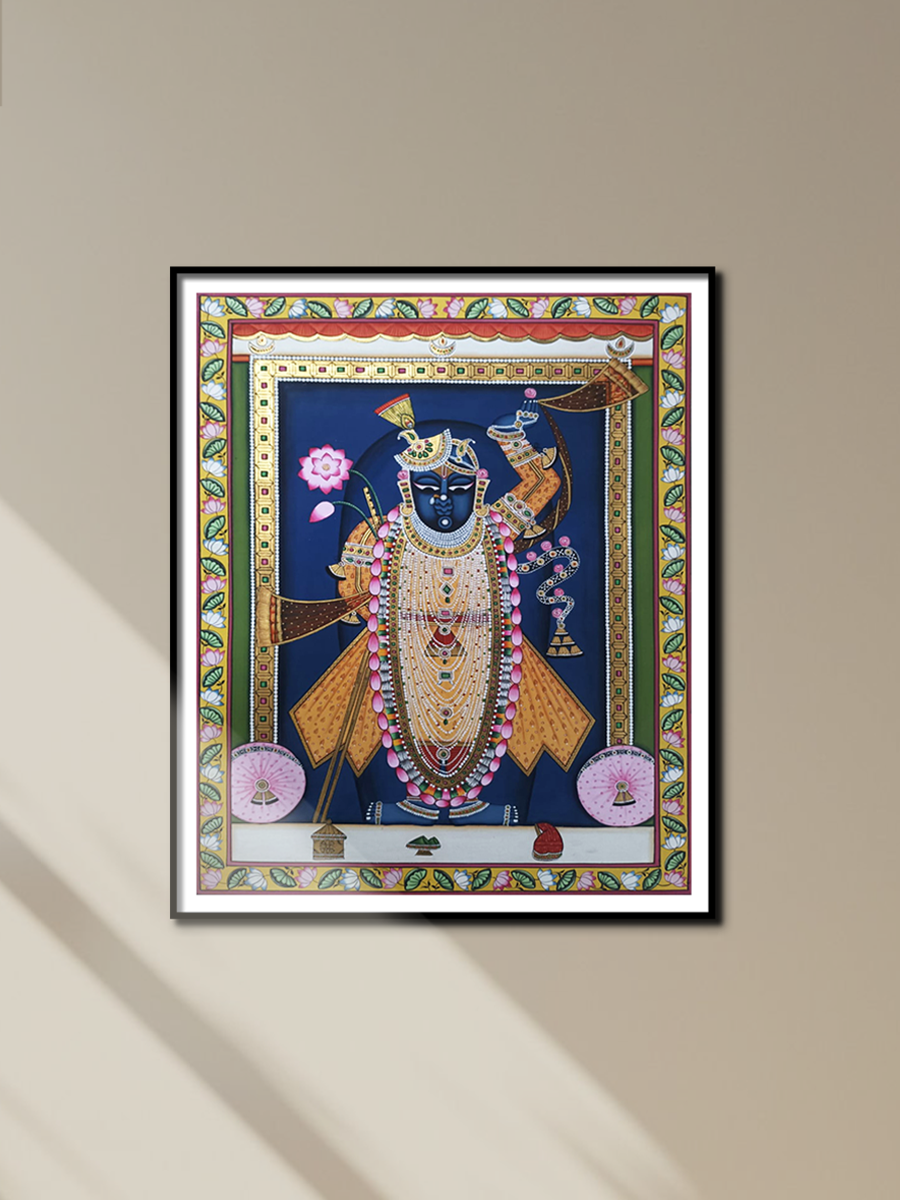
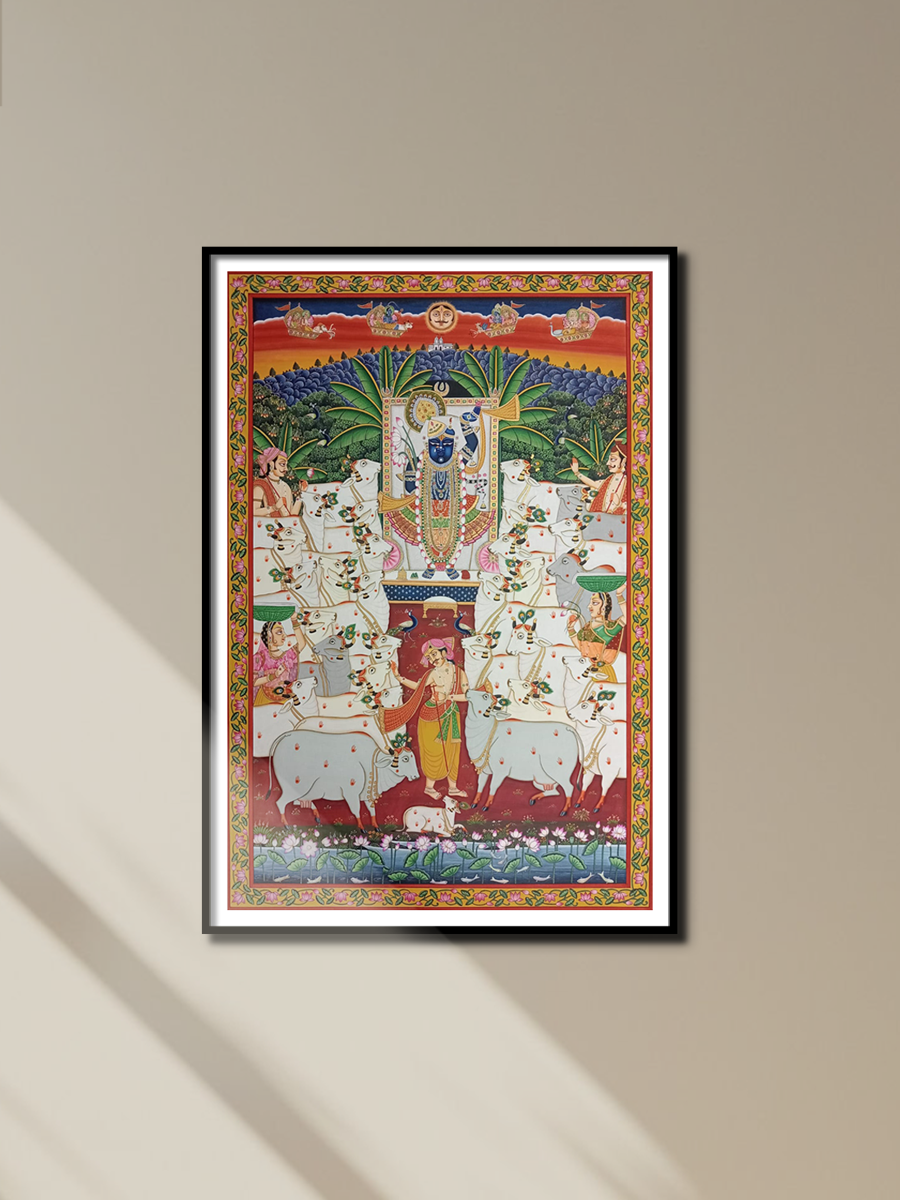
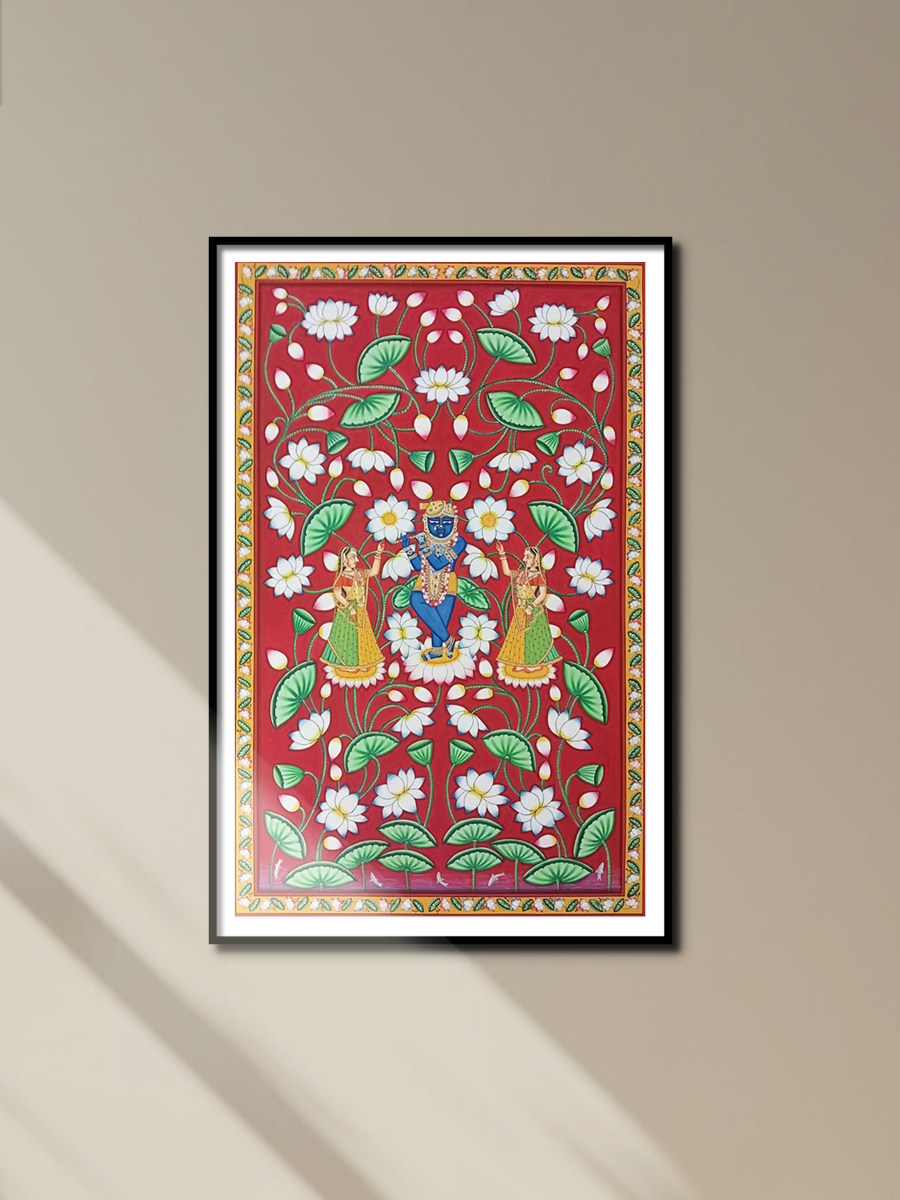
Shreenathji painting motif is a renowned and cherished element of Indian art, deeply rooted in the Vaishnavite tradition. These paintings depict the deity Shreenathji, a form of Lord Krishna manifested as a seven-year-old child, who is venerated at the temple in Nathdwara, Rajasthan.
History and Origin
The origin of Shreenathji paintings can be traced back to the 17th century when the idol of Shreenathji was moved to Nathdwara temple which is most popular for Shrinathji from Govardhan Hill, near Mathura, to protect it from Mughal Emperor Aurangzeb's iconoclastic campaigns. This relocation marked the beginning of a vibrant tradition of art centered around the deity, which was meant to serve both devotional and decorative purposes.
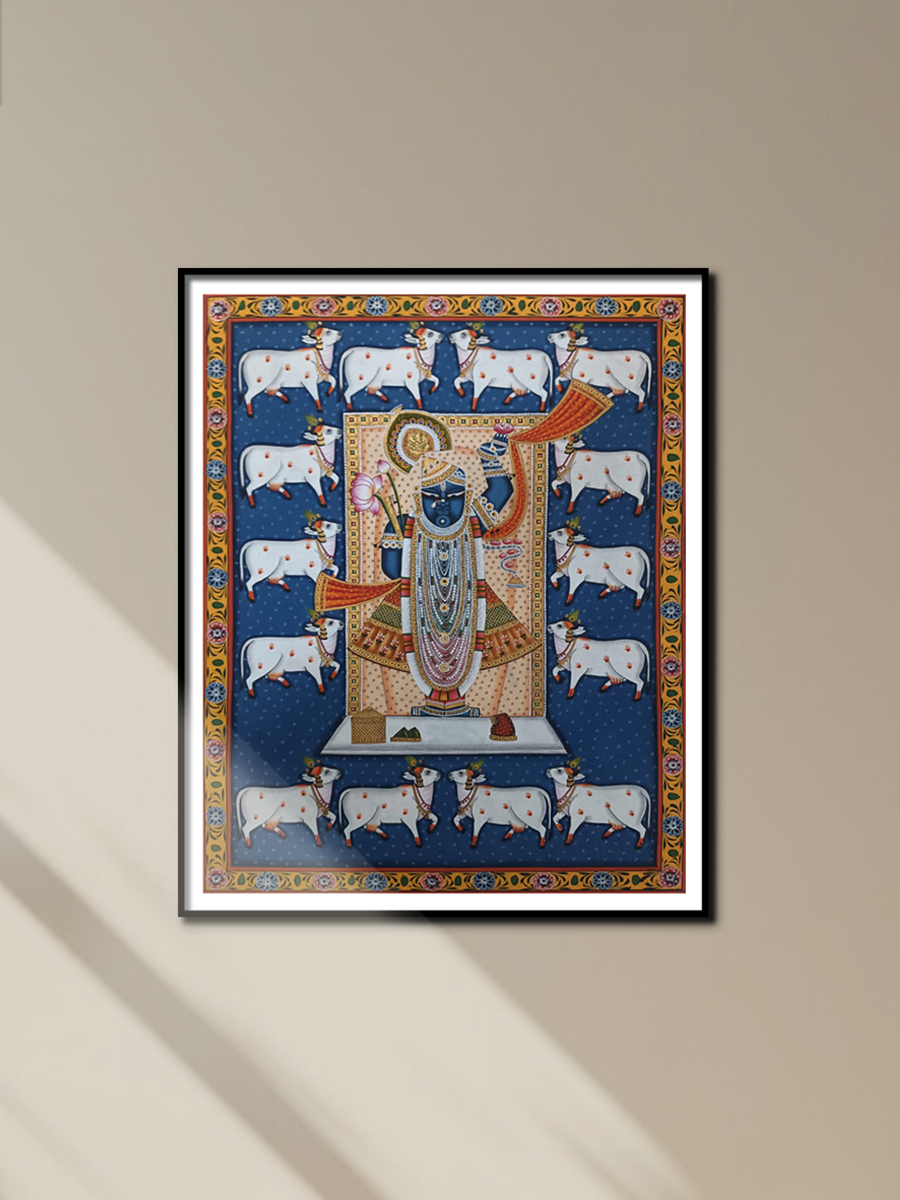
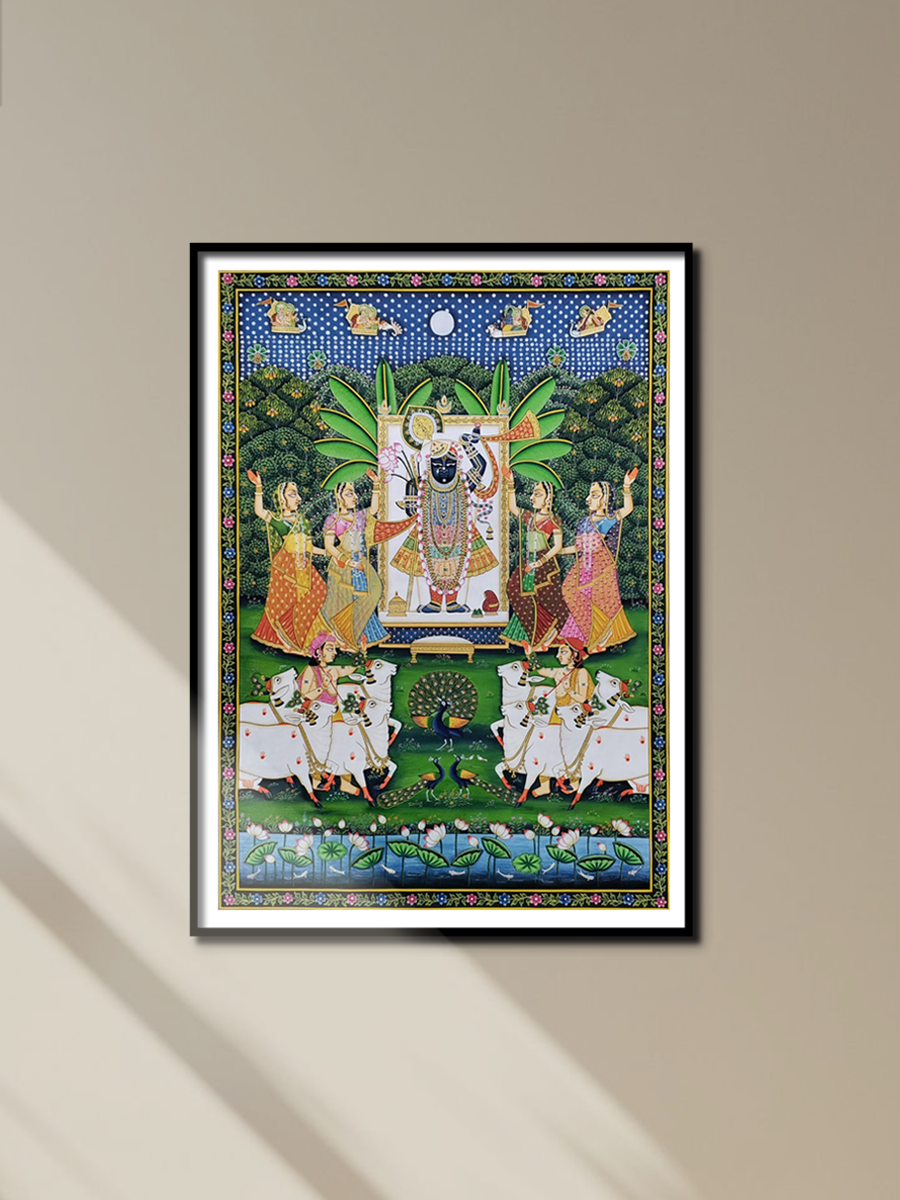
The paintings often depict Shreenathji in various contexts and scenarios, each holding significant religious and cultural meanings. These include scenes from his childhood, his divine pastimes, and celebrations of festivals like Janmashtami and Holi. Artists employ intricate detailing and vivid colors to bring these depictions to life, making each piece a spiritual and aesthetic delight.
4 Reasons for the popularity of Shrinathji Painting
Shreenathji paintings have garnered immense popularity for several reasons:
Devotional Significance:
For followers of the Pushti Marg sect, these paintings are more than just art; they are objects of worship. They are believed to carry the blessings of Shreenathji himself and are thus integral to daily rituals and festivities.
Artistic Excellence:
The meticulous craftsmanship, use of vibrant colors, and intricate designs make Shreenathji paintings visually striking. The art form has been preserved and passed down through generations, with contemporary artists continuing to innovate within the traditional framework.
Cultural Heritage:
These paintings encapsulate the rich cultural and religious heritage of Rajasthan. They offer a glimpse into the opulent traditions and the devotional fervor of the region, making them a favorite among art collectors and enthusiasts.
The 24 Swaroops of Shrinathji
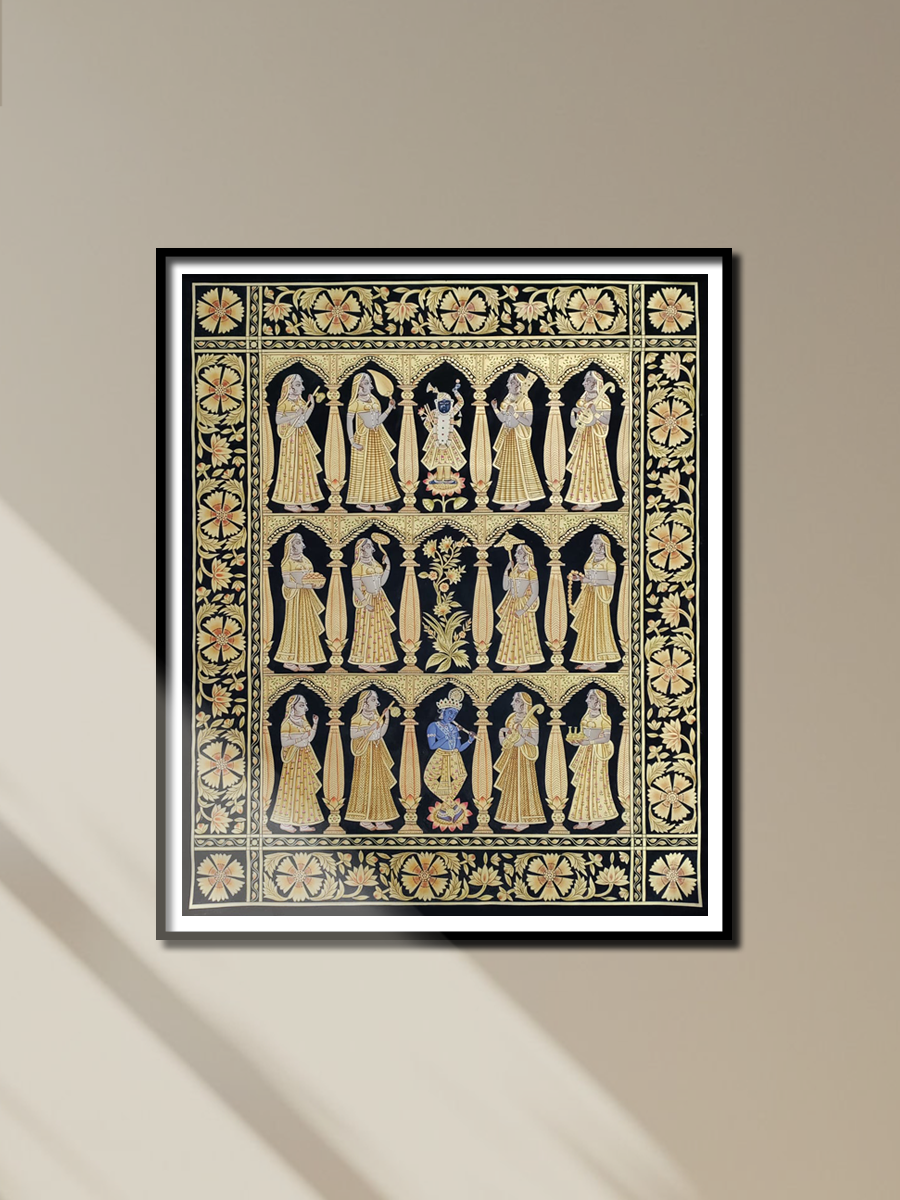
The 24 Swaroops of Shrinathji represent different aspects or manifestations of Lord Krishna in his childhood form. Each Swaroop is unique and holds a special significance in Vaishnava tradition. Some of the well-known Swaroops include:
Moorti Swaroop: The physical form of Shrinathji as depicted in the Pichwai paintings.
Bal Gopal Swaroop: The child form of Krishna.
Gopal Swaroop: The cowherd form of Krishna.
Madan Gopal Swaroop: The playful and mischievous form of Krishna.
Vrajendra Gopal Swaroop: The king of Vrindavan.
Nand Gopal Swaroop: The son of Nanda Baba.
Whose Avatar is Shrinathji?
Shrinathji is considered an avatar of Lord Krishna, specifically his childhood form. The term "avatar" refers to a descent of a deity into the human world for a specific purpose.
The Story Behind Shrinathji
The story behind Shrinathji is closely linked to the legends of Krishna's childhood in Vrindavan. It is believed that after Krishna killed Kansa, the evil king of Mathura, he returned to Vrindavan to continue his playful and divine activities. The Pichwai paintings depict various scenes from Krishna's life, including his interactions with the gopis, his pranks, and his divine pastimes.
Why are Shrinathji's Eyes Closed?
There are several interpretations for why Shrinathji's eyes are depicted as closed in the Pichwai paintings:
Divine Leela: It is believed that Shrinathji's eyes are closed as a symbol of his divine leela (play) and to maintain a sense of mystery and wonder.
Spiritual Focus: Some believe that the closed eyes represent a state of deep meditation or spiritual focus.
Protection: In some interpretations, the closed eyes are seen as a form of protection from evil forces.
Festive Celebrations:
The depiction of various festivals and rituals associated with Shreenathji adds a festive charm to these paintings. They often feature elaborate scenes of celebrations, which resonate with viewers and evoke a sense of joy and reverence.
FAQs
How are Shreenathji paintings used in worship?
Shreenathji paintings are used as objects of worship in temples and homes. Devotees often place them in prayer rooms and incorporate them into daily rituals and festive celebrations, believing they carry the blessings of Shreenathji.
What makes Shreenathji paintings popular among art collectors?
The meticulous craftsmanship, vibrant colors, intricate designs, and deep cultural and religious significance make Shreenathji paintings highly sought after by art collectors. They are admired for their aesthetic appeal and spiritual resonance.
Are there any particular symbols or motifs often seen in Shreenathji paintings?
Common symbols include the peacock feather, which is associated with Lord Krishna, the flute, cows, and lotuses. These symbols enhance the spiritual and cultural significance of the paintings.
Shreenathji painting motif is a renowned and cherished element of Indian art, deeply rooted in the Vaishnavite tradition. These paintings depict the deity Shreenathji, a form of Lord Krishna manifested...
Frequently Asked Questions
What is the historical and cultural significance of Shrinathji paintings?
These paintings hold profound historical and spiritual significance, tracing back to the 17th-century relocation of the Shrinathji idol to Nathdwara, Rajasthan, to protect it. Deeply rooted in the Vaishnavite Pushti Marg tradition, they depict Lord Krishna as a seven-year-old child, serving as devotional objects and a vibrant testament to Rajasthan's rich cultural heritage.
What traditional materials and techniques are primarily used in MeMeraki's Shrinathji artworks?
MeMeraki's Shrinathji paintings primarily utilize traditional techniques on cotton cloth, paper, or canvas. Artists meticulously employ vibrant natural pigments, poster colors, or acrylics. This intricate craftsmanship preserves the art form's authentic aesthetic, passed down through generations, ensuring each piece reflects true devotional artistry.
What artistic styles and devotional themes can I find within MeMeraki's Shrinathji collection?
Our Shrinathji collection showcases diverse depictions of Lord Krishna's childhood, including the "24 Swaroops" and scenes from his divine pastimes. You'll find vibrant portrayals of festivals like Janmashtami and Holi, interactions with gopis and cows, and symbolic motifs such as the lotus. Each artwork brings to life unique aspects of this revered deity.
How does MeMeraki ensure the authenticity of its Shrinathji paintings and how can I acquire one?
MeMeraki guarantees the authenticity of every Shrinathji painting by working directly with master artists from Nathdwara, Rajasthan. Each handpainted artwork comes with a signed Certificate of Authenticity. To acquire one, simply explore our collection online, select your desired piece, and proceed through our secure checkout process.
Why is Shrinathji often depicted with closed eyes in these traditional artworks?
The depiction of Shrinathji with closed eyes carries multiple interpretations within Vaishnava tradition. It symbolizes his divine "leela" or play, maintaining an air of spiritual mystery. Some believe it represents deep meditation or spiritual focus, while others view it as a form of divine protection from worldly distractions, enhancing reverence.
Can Shrinathji paintings integrate into contemporary home aesthetics?
Yes, absolutely. While deeply traditional, Shrinathji paintings, with their vibrant colors and intricate details, offer a unique blend of heritage and artistry. They can serve as captivating focal points, adding spiritual depth, cultural elegance, and a warm, handcrafted touch that beautifully complements diverse modern and minimalist interiors.
Who are the renowned artists behind MeMeraki's Shrinathji paintings?
MeMeraki collaborates with celebrated master artists who inherit and continue the legacy of Shrinathji painting. Our collection features works by revered practitioners like Shehzaad Ali Sherani, Naveen Soni, Sushil Soni, and Jayesh Sharma, each bringing their distinctive skill and devotion to this sacred art form, ensuring exceptional quality and authenticity.