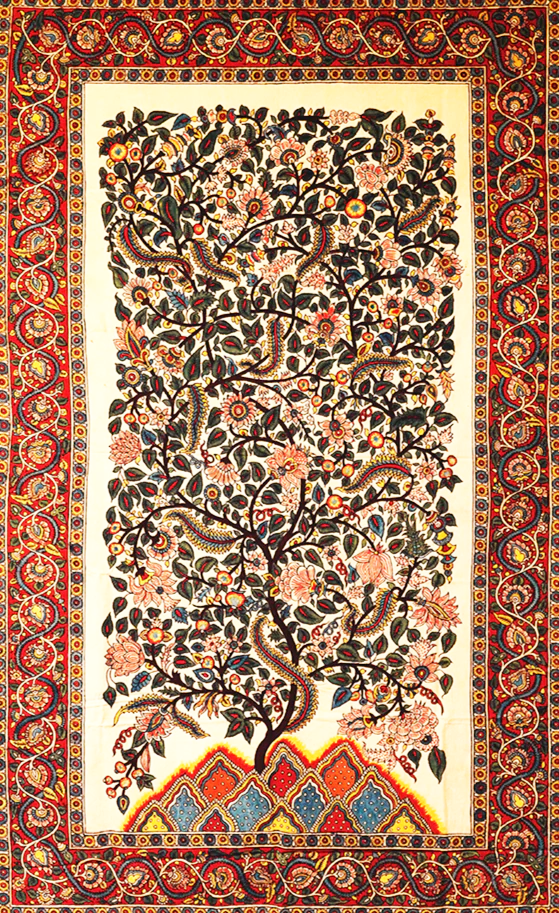
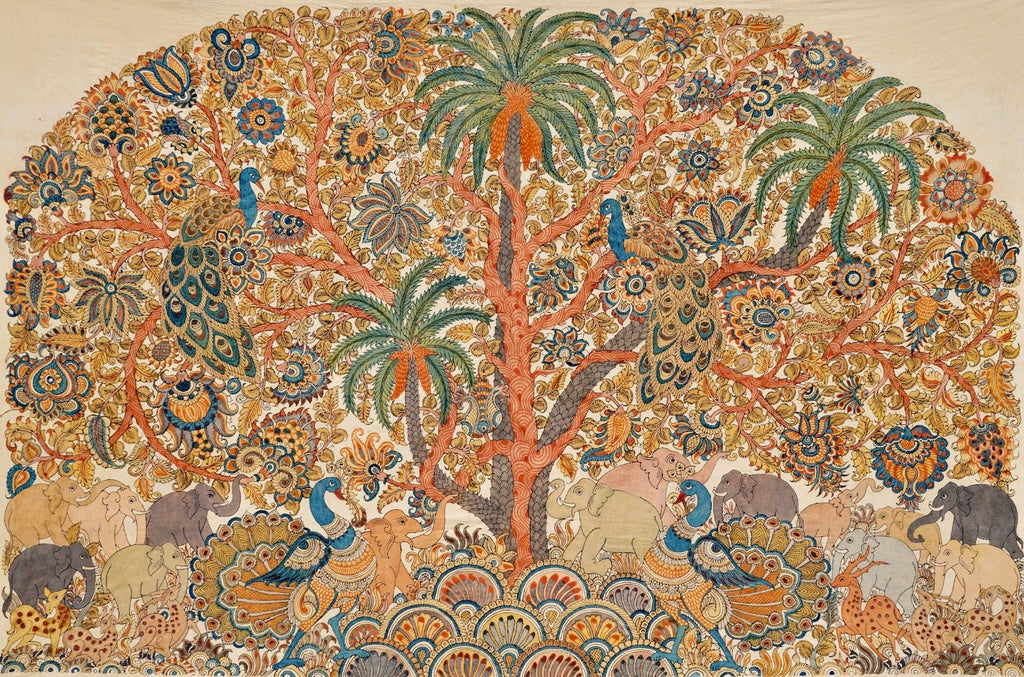
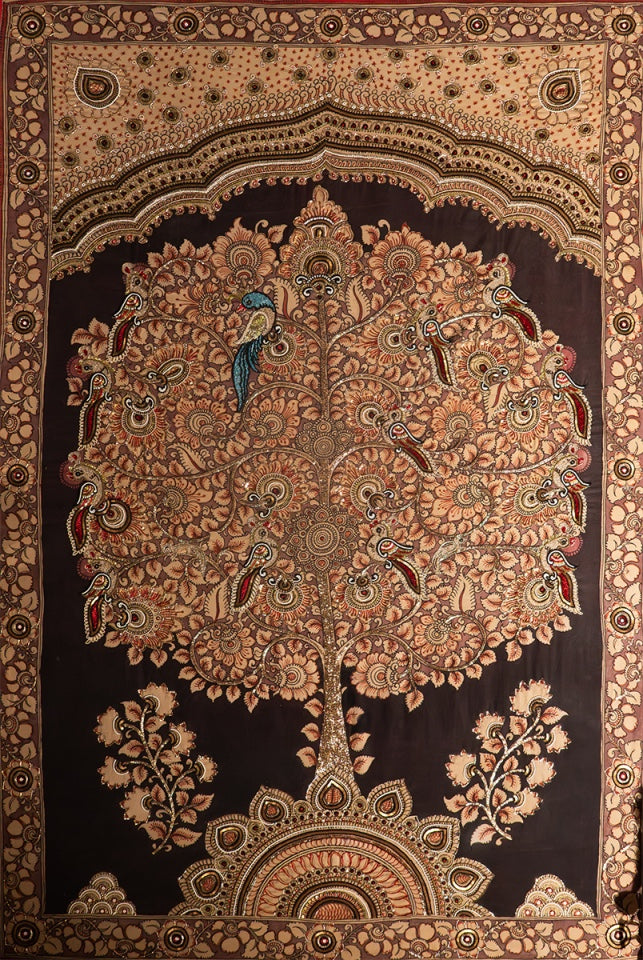
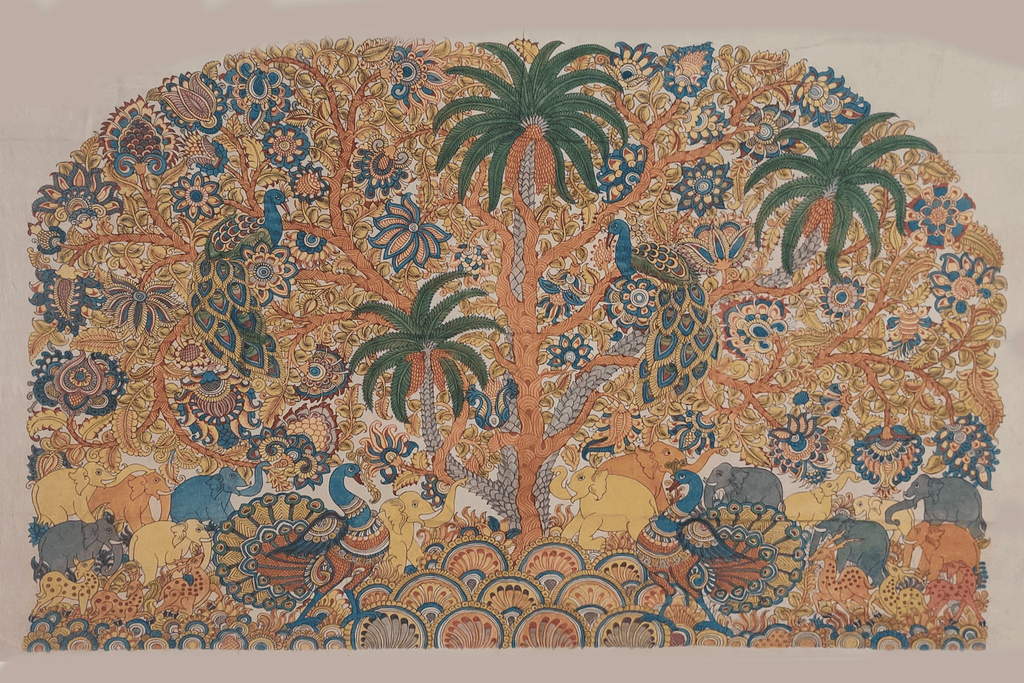
Harinath's Kalamkari painting portrays the Tree of Life, also known as the Akshaya Vat or the Immortal Tree in Hindu mythology. This artwork represents the divine Trimurti—Lord Brahma, Lord Vishnu, and Lord Shiva—who embody the roles of creation, preservation, and destruction.
The painting serves as a bridge between life and death, heaven and earth. Its intricate design showcases the roots of the tree, which begin underground in the realm of the underworld, signifying the connection with the cycle of life. The branches of the tree are adorned with flowers, leaves, and bird motifs that symbolize spiritual entities and their presence in the Tree of Life.
The trunk of the tree breaks through the earthly realm and ascends to the sky, symbolizing the tree's connection with both realms. The upper branches, intricately curled, twisted, and intertwined, depict the tree's connection to the heavens, highlighting the interplay between the earthly and celestial realms.
This painting beautifully illustrates the interdependence of life on Earth, emphasizing the vital relationship between flora, fauna, and all living beings. It serves as a poignant reminder that the existence of one is intertwined with the other, showcasing the harmony and interconnectedness present in nature.
Through his Kalamkari art, Harinath captures the profound significance of the Tree of Life, showcasing the divine unity and interwoven nature of existence in Hindu mythology.
This is a Kalamkari-inspired painting done on canvas using acrylic paints. Unlike the traditional practice where natural dyes are meticulously applied on cloth, this painting employs modern materials while retaining the essence of Kalamkari's narrative and ornamental tradition.




 Ships worldwide

 ODOP Spotlight
 GI Tag