What is Kerala Mural Painting?
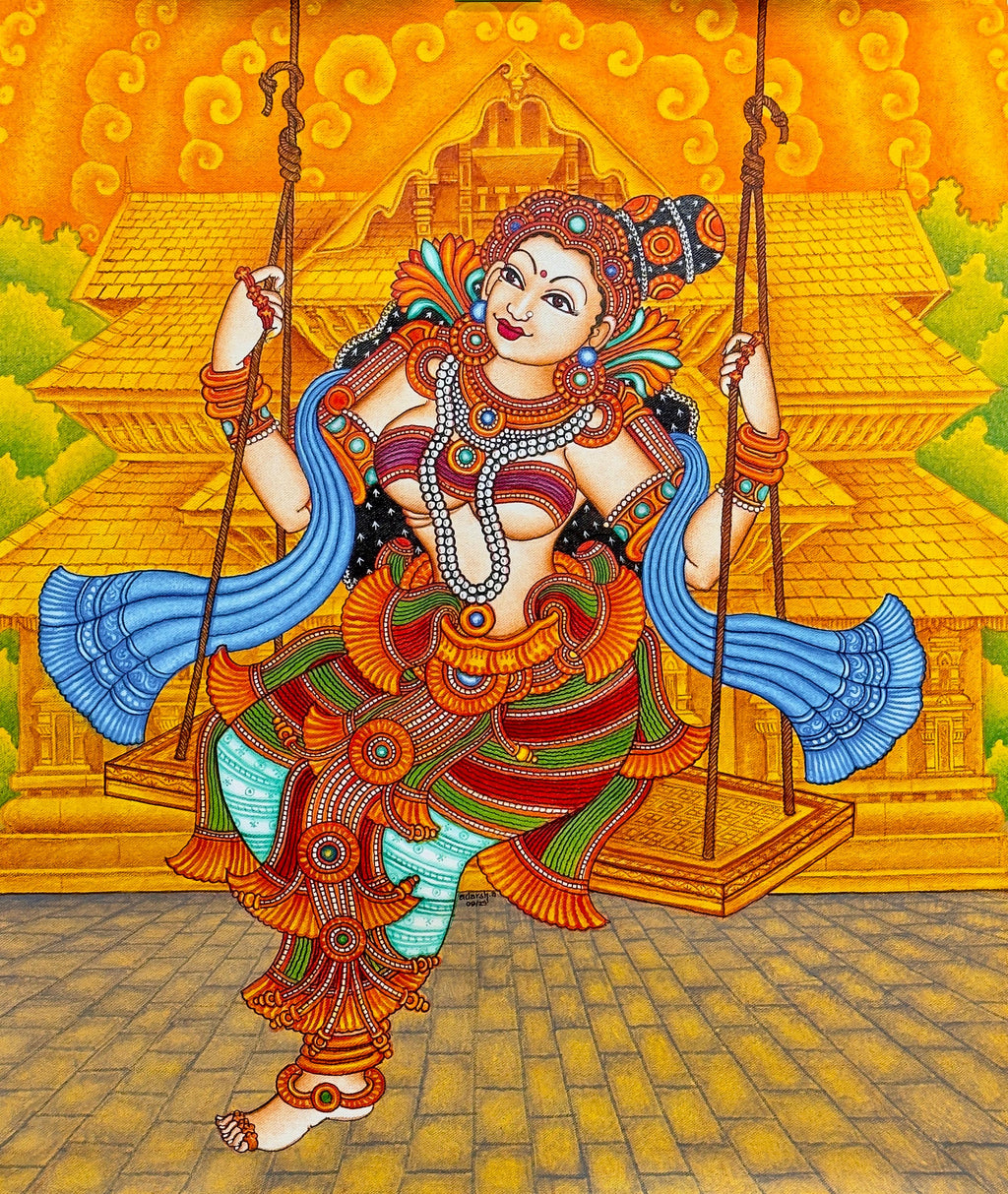
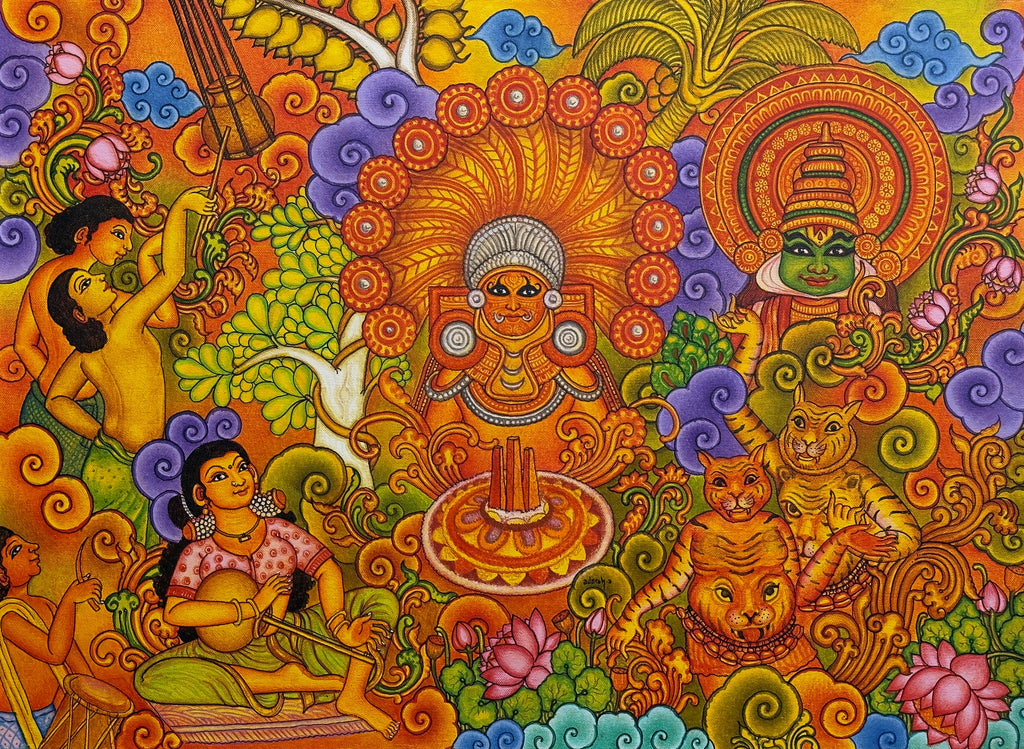
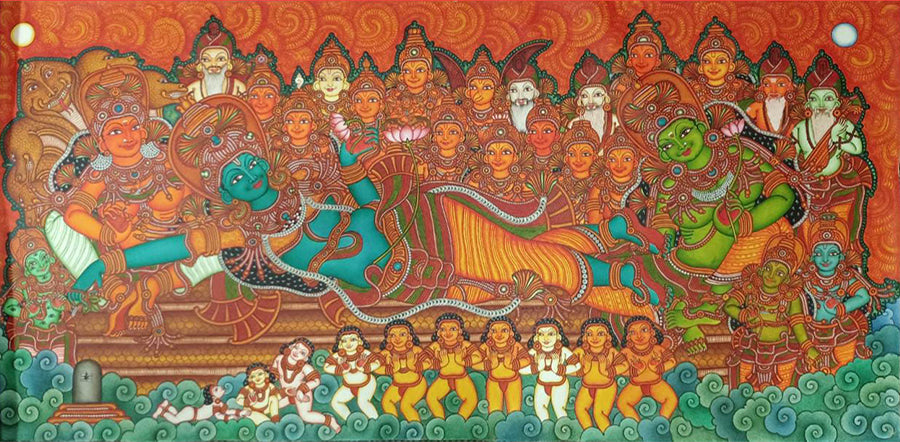
Handmade Kerala mural painting is a traditional classical art form originating in Kerala, deeply rooted in temple culture, mythology and spiritual storytelling. Dating back to around the 7th - 8th centuries CE, this art form flourished on the walls of temples and palaces, depicting scenes from Hindu epics such as the Ramayana and Mahabharata. Known for its disciplined symmetry, expressive figures and vibrant colour palette, Kerala murals transform sacred narratives into visually rich compositions. Over time, the tradition has evolved from temple walls to portable mediums like canvas and wood, allowing contemporary artists to preserve and reinterpret this heritage while staying connected to its devotional essence.
Key Features of Kerala Mural Paintings
Kerala mural paintings are celebrated for their rich symbolism, precise linework and spiritual depth. Some defining features of this art form include:
- Bold and Vibrant Colour Palette (Panchavarna tradition)
- Detailed Ornamentation and Symmetrical Composition
- Themes Based on Hindu Mythology and Devotional Stories
- Expressive Facial Features and Elaborate Eye Detailing
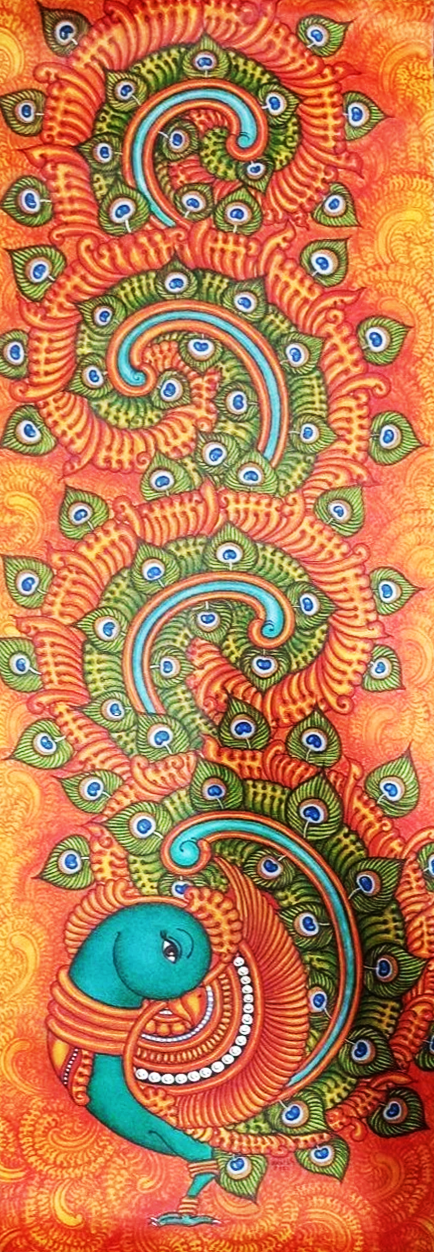
- Nature Motifs like Lotus, Peacock, Trees and Floral Patterns
- Strong Symbolism through Colour and Character Representation
- Intricate Borders and Decorative Fillers
- Traditional Fresco Techniques and Contemporary Canvas Adaptations
- Deep Spiritual and Temple-Centric Significance
- Storytelling Through Sacred and Mythological Narratives
History of Kerala Mural Paintings
Origin of Kerala Mural Paintings
Kerala mural art originated between the 7th and 8th centuries CE, heavily rooted in the structural and spiritual traditions of southwestern India. Originally painted on the walls of temples, palaces and churches, these murals depicted epic scenes from Hindu mythology and local folklore. Crafted using natural pigments and traditional techniques, they were designed as visual prayers, transforming sacred spaces into vibrant, storytelling sanctuaries.
Evolution of Kerala Mural paintings
For centuries, the art form thrived under royal patronage, reaching its golden age between the 15th and 18th centuries. However, the tradition faced a severe decline during the colonial era as patronage dried up and many historic walls fell into disrepair. The true revival began in the late 20th century, spearheaded by dedicated art institutions and masters who formalized the training. This crucial shift moved the art from fading temple walls onto modern canvases, paper and wood, saving the technique from extinction.
Contemporary Kerala Mural Paintings
Today, Kerala mural painting is celebrated as a premier classical art form, revered for its highly stylized figures, elongated eyes, and a strict traditional color palette dominated by saffron, red, and green. Modern artists faithfully preserve these ancient iconographies while adapting them for global art galleries and architectural interiors, ensuring the legacy continues to breathe in the modern world.
Kerala Mural Painting Themes and Motifs
Kerala mural paintings are deeply rooted in mythology, spirituality and the visual traditions of temple art. Through vibrant colours, intricate ornamentation, and symbolic imagery, these murals transform sacred stories into powerful visual narratives that reflect devotion, cosmic order, and the beauty of nature.
Divine Figures and Deities
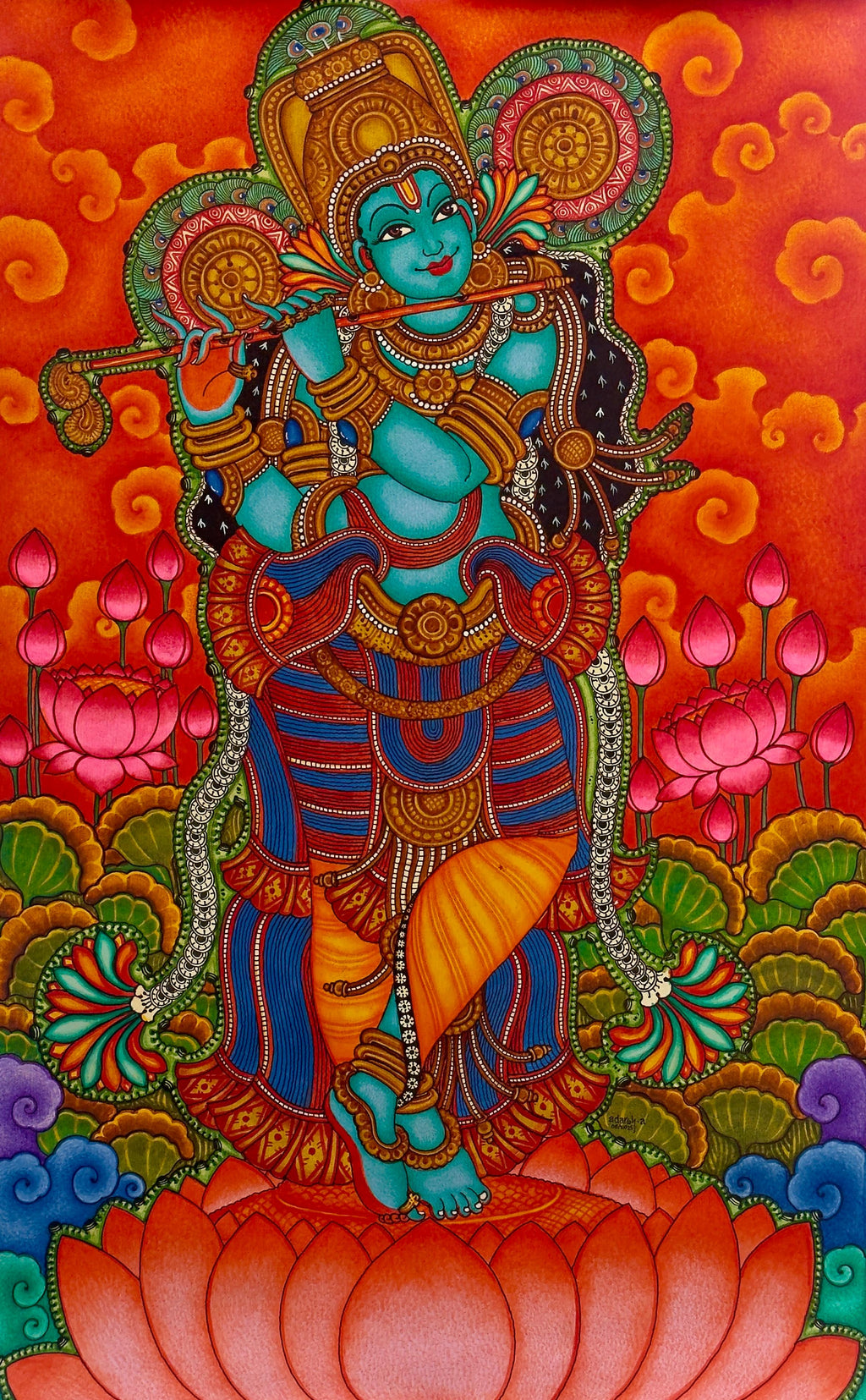
The most prominent theme in Kerala mural art is the depiction of Hindu deities such as Shiva, Vishnu, Krishna, Ganesha, Devi and Ardhanarishvara. These divine figures are often portrayed in majestic poses, adorned with elaborate jewellery and crowns, symbolising their power, grace and spiritual significance.
Mythological Narratives and Temple Rituals
Kerala murals frequently illustrate episodes from sacred epics like the Ramayana, Mahabharata and the Puranas. Many murals also depict scenes of worship, temple rituals and symbolic offerings, reinforcing their sacred role in religious spaces. All this connects the viewer to traditions of devotion and serve as reminders of the spiritual practices embedded in Kerala’s cultural heritage.
Lotus and Floral Motifs
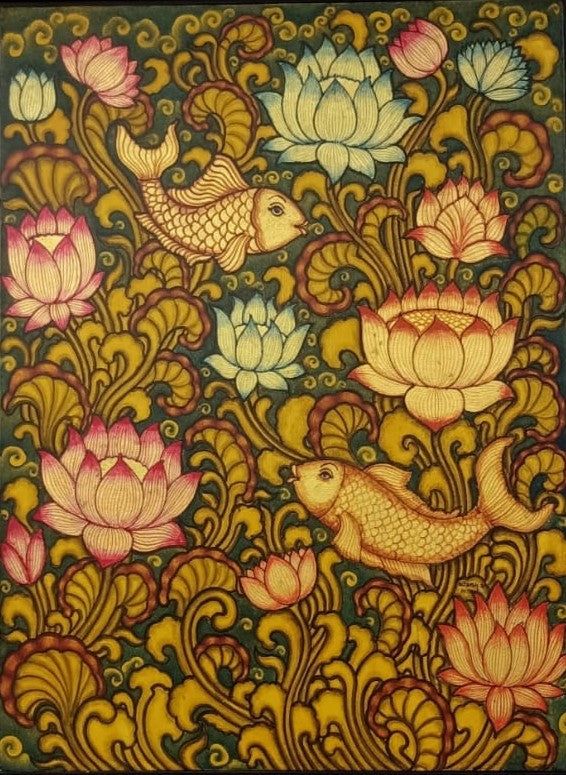
The lotus is one of the most recurring motifs in Kerala mural paintings, symbolising purity, divinity and spiritual awakening. Floral patterns and decorative vines are often used as fillers and borders, creating balance and enhancing the ornamental richness of the composition.
Animals
Animals such as elephants, peacocks, cows, swans and serpents frequently appear in Kerala murals. These creatures carry symbolic meanings. Elephants represent strength and wisdom, peacocks signify beauty and grace, while serpents are linked with protection and fertility.
Nature and Cosmic Elements
Natural elements like trees, rivers, mountains, the sun and celestial backgrounds are often incorporated to create a harmonious relationship between the divine and the earthly world. These motifs emphasise the belief that nature itself is sacred and interconnected with spiritual life.
Symbolism of Bhava and Expression
Facial expressions and body postures are central motifs in Kerala mural painting. The exaggerated eyes, hand gestures (mudras) and dynamic poses convey emotions such as compassion, anger, courage and devotion, making the artwork both expressive and spiritually immersive.
Materials Used in Kerala Mural Paintings
Traditionally, Kerala mural artists created colours from natural materials such as mineral stones, leaves, plant extracts and soot, mixing them in coconut shells with neem sap. Contemporary artists often use acrylic paints and canvas while preserving the strict colour palette, stylized iconographies and sacred storytelling traditions that define Kerala murals.
Colours Used in Kerala Mural Paintings
- Saffron and Red: Made from red laterite stones, these dominant shades represent power and heroic energy, used for primary figures and backdrops.
- Yellow: Ground from yellow ochre or laterite minerals, yellow adds brightness and is used for bodies of specific deities, clothing, and ornaments.
- Green: Extracted from the juice of the indigo plant, green symbolizes purity and righteousness, reserved for noble gods like Rama and Krishna.
- Black: Collected as soot from oil lamps, black is used for final outlines, separating details, and defining malevolent characters.
- White: Rather than being applied as paint, white is the natural background of the wall or canvas left blank to highlight eyes, ornaments, and negative space.
How Kerala Mural Paintings are Made
Kerala mural paintings begin with a light freehand sketch using ash or yellow ochre to map out highly stylized figures with elongated eyes. Artists then fill the forms with flat colours in a strict sequence, applying them from light to dark before using fine dots and shading to create depth. Once the colours are set, a fine brush dipped in black soot is used to redraw the final sharp outlines. While traditional murals were painted on treated temple and palace walls, contemporary artists now replicate this elaborate process on canvas, paper, and fabric.
Famous Kerala Mural Artists
Adarsh
Adarsh is a contemporary Kerala mural artist known for reinterpreting traditional temple-inspired iconography through detailed and vibrant compositions. His works often feature deities, mythological narratives and symbolic motifs, blending classical mural aesthetics with modern artistic sensibilities.
V. M. Jijulal
V. M. Jijulal is a distinguished Kerala mural artist celebrated for preserving the authenticity of this classical art form while adapting it to contemporary mediums. His paintings are recognised for their intricate detailing, devotional themes and strong adherence to the traditional visual grammar of Kerala temple murals.
Kerala Mural Paintings for Home Decor
Kerala mural paintings have become a timeless choice for home decor because of their vibrant colours, intricate detailing, and deep spiritual and cultural significance. Featuring motifs such as divine figures, lotus patterns, sacred animals and mythological narratives, these artworks bring elegance, warmth and a sense of tradition into both contemporary and classic interiors.
Whether displayed in living rooms, pooja rooms, bedrooms, hallways, study spaces, meditation corners or as gallery walls. Kerala mural paintings create striking focal points while reflecting India’s rich temple art heritage. Their ornamental richness, symbolic depth and handcrafted character make them ideal for homeowners seeking decor that is both aesthetically captivating and culturally meaningful.
Kerala Mural Paintings for Gifting
Kerala mural paintings make meaningful gifts for weddings, anniversaries, housewarmings, festive occasions and spiritual celebrations. Rich in symbolism and artistic detail, these artworks carry the essence of tradition, devotion and storytelling, making them thoughtful gifts for art lovers, collectors and those who appreciate cultural heritage.
Popular motifs such as Ganesha, Krishna, Lakshmi, lotus flowers, peacocks and sacred animals are often associated with blessings, prosperity, wisdom and protection. Whether gifted as framed artworks, decorative panels or devotional pieces, Kerala mural paintings offer a unique blend of spirituality, craftsmanship and timeless aesthetic appeal.
FAQs About Kerala Mural Paintings
What is Kerala mural painting famous for?
Kerala mural painting is famous for its vibrant natural colours, intricate detailing and temple-inspired storytelling. Rooted in Kerala’s sacred art traditions, it is especially known for depicting Hindu deities, mythological narratives, floral motifs and symbolic imagery through highly stylized compositions.
What makes Kerala mural paintings unique from other Indian art forms?
Kerala mural paintings are unique for their highly stylized figures, elongated expressive eyes, strict use of the Panchavarna colour palette and deep connection to temple architecture and ritual traditions. Unlike many other Indian art forms, they follow a disciplined visual grammar that combines devotional storytelling, symbolic colours and intricate ornamentation to create spiritually immersive compositions.
What types of Kerala mural paintings can I buy?
Kerala mural art is available in a variety of themes, including divine portraits of Ganesha, Krishna, Shiva, Lakshmi and Devi, as well as mythological scenes, lotus motifs, peacocks and sacred animal depictions. These artworks come in different sizes and mediums such as canvas, wood panels and framed wall art.
Is Kerala mural art suitable for home decor and gifting?
Absolutely. Kerala mural paintings are ideal for living rooms, pooja rooms, bedrooms, hallways, meditation spaces and gallery walls. Their spiritual symbolism and artistic richness also make them meaningful gifts for weddings, anniversaries, housewarmings, festive occasions and religious celebrations.
Where can I buy authentic Kerala mural paintings online?
MeMeraki’s Kerala Mural Collection features authentic handcrafted artworks created by skilled contemporary mural artists. From traditional depictions of deities and temple narratives to modern adaptations on canvas and wood, the collection reflects the richness and elegance of Kerala’s classical mural tradition.
Explore MeMeraki's Kerala Mural Collection featuring authentic handcrafted paintings inspired by Kerala's classical temple art tradition. Shop devotional artworks, mythological paintings and nature-inspired murals that celebrate India's rich artistic heritage while adding timeless elegance to your home.
Show Less