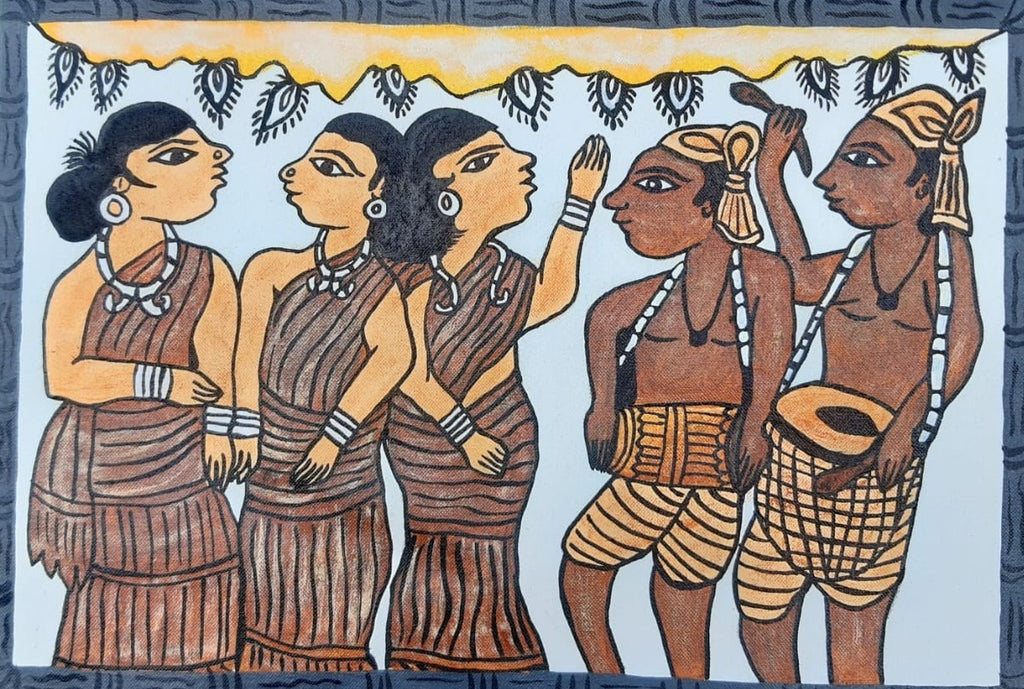
What is Sohrai Painting?
Sohrai painting is a traditional tribal mural art form practiced primarily by the indigenous communities of Jharkhand, especially by women from the Santhal, Kurmi, Oraon and Munda communities. Closely associated with the harvest festival of Sohrai, celebrated after the autumn crop, this art form reflects a deep bond between humans, animals and nature. Traditionally painted on the mud walls of homes using natural earth pigments, Sohrai art is known for its flowing lines, organic motifs and symbolic depictions of fertility, prosperity and coexistence. Over time, this ritualistic wall art has evolved into a recognised contemporary art form while preserving its cultural and ecological roots.
Explore authentic Sohrai paintings handcrafted by traditional tribal artists and discover the beauty of India's indigenous artistic heritage. From nature-inspired compositions and animal motifs to sacred symbols and harvest-inspired designs, shop handmade Sohrai paintings that celebrate the cultural traditions of Jharkhand. Perfect for home decor, gallery walls, and meaningful gifting, these handcrafted artworks bring timeless craftsmanship, earthy colours, and tribal storytelling into contemporary spaces.
Key Features of Sohrai Painting
Rooted in seasonal cycles and ancestral knowledge, Sohrai transforms everyday experiences and sacred beliefs into visual expressions of harmony and abundance. Some defining features of this art form include:
- Use of Natural Earth Pigments and Clay Colours
- Depictions of Animals, Birds and Forest Life
- Strong Association with Harvest and Fertility Rituals
- Flowing, Bold and Organic Linework
- Symbolism of Prosperity, Abundance and Coexistence
- Nature-Centric Themes Reflecting Rural Life
- Traditional Mural Practice on House Walls
- Geometric and Curvilinear Motifs Inspired by the Environment
- Deep Cultural and Spiritual Significance
- Storytelling Through Ritual and Seasonal Narratives
- History of Sohrai Paintings
Origin of Sohrai Paintings
Sohrai art originated within the tribal communities, primarily the Santhal, Munda and Oraon communities of Jharkhand in eastern India. Traditionally created by women, these paintings are applied to the mud walls of homes during the harvest festival of Sohrai, which coincides with Diwali. The artwork is an act of gratitude towards nature and cattle, featuring animals, birds and plants to invite prosperity, fertility and protection into the household.
Evolution of Sohrai Paintings
The transition of Sohrai art from village mud walls to mediums such as paper, canvas and public murals began gaining momentum in the late 20th century. Spearheaded by cultural activists and indigenous artists, this shift was heavily supported by the state’s recognition of its cultural depth. The art form achieved major recognition when it received the Geographical Indication (GI) tag in 2020, which helped preserve its unique identity and brought international attention to its distinctive monochromatic and earth-toned line work.
Contemporary Sohrai Paintings
Today, Sohrai painting is celebrated as a vital and resilient indigenous art tradition of India. Contemporary Sohrai artists are bringing these stylized wildlife and geometric patterns into modern art galleries, textile designs and architectural projects. While adapting to new materials like acrylics and handmade paper, artists remain deeply tied to their roots, using the art form to tell stories of ecological balance and heritage in the modern world.
Sohrai Painting Themes and Motifs
Sohrai paintings draw inspiration from agriculture, nature, wildlife, fertility rituals and the rhythms of rural life. Through earthy colours and fluid forms, artists transform these themes into visual narratives that honour the intimate relationship between humans, animals and the land.
Nature and the Earth
Nature forms the foundation of Sohrai art. Forests, hills, rivers, plants and fertile fields are central to its imagery, reflecting the agrarian worldview of the communities who practice it. The earth itself is seen as a nurturing force, and the paintings celebrate its abundance and cyclical renewal.
Animals and Cattle
Animals are among the most prominent motifs in Sohrai painting, especially cattle, bulls, elephants, deer, peacocks and fish. Since the Sohrai festival is closely tied to cattle worship and harvest celebrations, these creatures symbolise prosperity, fertility, strength and the harmony between domestic and wild life.
Fertility and Harvest Symbolism
A defining theme in Sohrai art is fertility, of the land, animals as well as the community. Motifs such as seeds, vines, flowers and womb-like patterns represent growth, abundance and regeneration, echoing the agricultural cycles that shape village life.
Flora and Organic Patterns
Leaves, creepers, flowers and branching forms are recurring elements in Sohrai compositions. These organic motifs create rhythm and movement, symbolising life’s continuous growth and the inseparable bond between all living beings.
Rituals and Community Life
Sohrai paintings are deeply connected to seasonal rituals, festivals and communal gatherings. Many works reflect scenes of celebration, cattle decoration, farming activities and shared village traditions, preserving the cultural memory of collective life.
Sacred Symbols and Ancestral Connections
Sohrai art often incorporates symbolic patterns linked to ancestral beliefs and spiritual protection. Geometric forms, handprints and ritual marks represent blessings, continuity and the enduring connection between the present generation, their ancestors and the natural world.
Materials Used in Sohrai Paintings
Traditionally, Sohrai artists rely entirely on natural, locally sourced materials, specifically different types of natural soils and clays known as dhuda mitti. Contemporary artists have begun translating these murals onto handmade paper and canvas using acrylics, but they make a conscious effort to preserve the organic earth tones, bold outlines and unique texturing tools, like chewed twigs or cloth swabs, that give the art its rustic soul.
Colours Used in Sohrai Paintings
-
Black: Sourced from kali mitti or charcoal, black is used to lay down the bold, prominent outlines of the entire composition and define the central animal figures.
-
Red: Obtained from geru mitti or local iron-rich soils, red represents fertility and the life-force of the earth, often used to fill in the bodies of large animals or decorative borders.
-
Yellow: Derived from pila mitti , yellow brings warmth and brightness to the mural, typically used to fill background spaces, birds and floral elements.
-
White: Created using charak mitti, white is essential for the background base coat or for highlighting specific details, contrasts and internal line work.
-
Brown and Earth Tones: Produced from standard local alluvial mud (dhuda mitti), these various shades of brown act as the natural canvas coat or provide a grounding balance to the layout.
How Sohrai Painting is Made
Sohrai paintings begin with prepping the canvas, traditionally a fresh coat of wet mud or kaolin white clay on the house walls. While the surface is still damp, the artist sketches bold outlines of wildlife like humped cows, birds and fish, often accompanied by geometric plants or lotus motifs.
The truly distinctive feature of Sohrai is its texturing technique. Artists use a traditional scraping method (kamala) or paint with simple household tools like brooms, pieces of cloth or chewed twigs (datun). By dragging a broken plastic or wooden comb through a wet coat of darker clay over a lighter base, they scrape away layers to reveal stunning, rhythmic patterns of parallel lines and waves underneath.
Famous Sohrai Artists
Manikchand Mahto
Manikchand Mahto is one of the leading contemporary practitioners of Sohrai painting and has played an important role in preserving and promoting this traditional art form beyond its rural origins. His works draw deeply from the natural world, featuring animals, forests and ritual motifs that reflect the ecological and cultural essence of Sohrai art. Through his practice, he has helped bring greater recognition to the artistic heritage of Jharkhand.
Rukmani Devi
Rukmani Devi is a noted Sohrai artist known for her expressive use of natural pigments and fluid, organic compositions. Her paintings often depict themes of fertility, wildlife and agrarian life, staying rooted in the ritual traditions of Sohrai while adapting the art form to contemporary surfaces such as paper and canvas. Her work reflects the enduring role of women as custodians of this mural tradition.
Sohrai Paintings for Home Decor
Sohrai paintings have become an increasingly popular choice for home decor because of their earthy tones, organic forms and deep connection to nature, harvest and tribal traditions. Featuring motifs such as cattle, elephants, deer, peacocks, fish, vines and fertility symbols, these artworks bring warmth, balance and a natural rhythm into both contemporary and traditional interiors.
Whether displayed in living rooms, dining spaces, bedrooms, study areas, gallery walls or meditation corners, Sohrai paintings create striking focal points while celebrating India’s rich indigenous heritage. Their raw textures, handcrafted quality and symbolic richness make them ideal for homeowners looking to incorporate meaningful and culturally rooted art into their spaces.
Sohrai Paintings for Gifting
Sohrai paintings make meaningful gifts for weddings, housewarmings, anniversaries, festive occasions and special celebrations. Rooted in themes of abundance, fertility, prosperity and harmony with nature, these artworks carry a deep cultural and symbolic significance that makes them both thoughtful and distinctive.
Popular motifs such as cattle, elephants, peacocks, fish and flowering vines are often associated with strength, renewal, growth and prosperity. Whether gifted as framed artworks or decorative wall pieces, Sohrai paintings offer a unique blend of tradition, artistry and heritage, making them memorable gifts for art enthusiasts, collectors and lovers of handcrafted decor.
FAQs About Sohrai Paintings
1. What is Sohrai painting famous for?
Sohrai painting is famous for its earthy colours, organic patterns, and strong connection to harvest rituals, fertility and nature. It is known for depicting animals, forests, plants and symbols of abundance and coexistence. It has also been recognised under the One District One Product (ODOP) initiative of India for Hazaribagh, highlighting its cultural and artisanal significance.
2. Does Sohrai painting have a GI Tag?
Yes. Sohrai painting, along with Khovar painting, has received Geographical Indication (GI) status under the name Sohrai-Khovar Painting. This recognition helps preserve the authenticity of the art form while supporting the indigenous communities and women artists who continue to practice it in Jharkhand.
3. What types of Sohrai paintings can I buy?
Sohrai art is available in a variety of themes, including animal motifs, harvest-inspired compositions, fertility symbols, forest life, birds and nature-based tribal artworks. These artworks are available in different sizes and formats, suitable for homes, offices and personal collections.
4. Is Sohrai art suitable for home decor and gifting?
Absolutely. Sohrai paintings are ideal for living rooms, dining spaces, bedrooms, study corners and gallery walls. Their earthy palette and symbolic themes of prosperity, fertility and harmony also make them meaningful gifts for weddings, anniversaries, housewarmings and festive occasions.
5. Where can I buy authentic Sohrai paintings online?
MeMeraki’s Sohrai Art Collection features authentic handcrafted artworks created by renowned Sohrai artists. From animal-inspired compositions and harvest motifs to contemporary interpretations of this mural tradition, the collection showcases the richness, symbolism and cultural heritage of Sohrai art.
Explore MeMeraki's Sohrai Painting Collection and shop authentic handmade tribal artworks crafted by skilled artists from Jharkhand. Discover nature-inspired paintings that celebrate India's indigenous heritage and bring timeless craftsmanship into your home, art collection, or gifting.
Show Less




 Backed By MeMeraki Promise
Authenticity • Safe Delivery • Easy Resolution
Backed By MeMeraki Promise
Authenticity • Safe Delivery • Easy Resolution