What is Madhubani Art?
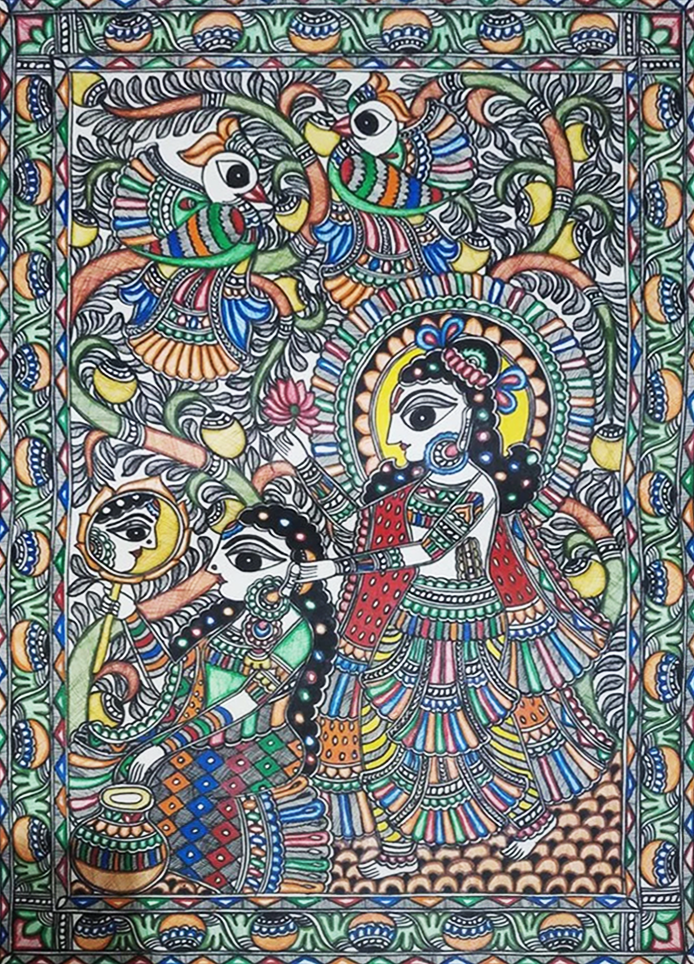
Madhubani art, also known as Mithila art, is a traditional Indian painting style originating from the Mithila region of Bihar, India. The term “Madhubani” translates to “forest of honey,” reflecting the deep connection between the art form and nature. Celebrated for its intricate patterns, vibrant colours, symbolic motifs and storytelling traditions, Madhubani painting is one of India’s most recognised folk art forms.
Traditionally created by women on the walls and floors of homes during weddings, festivals and religious ceremonies, Madhubani paintings depict themes inspired by Hindu mythology, folklore, nature and everyday village life. Over time, the art form evolved from ritual wall paintings into collectible artworks on paper, canvas, textiles and contemporary decor objects.
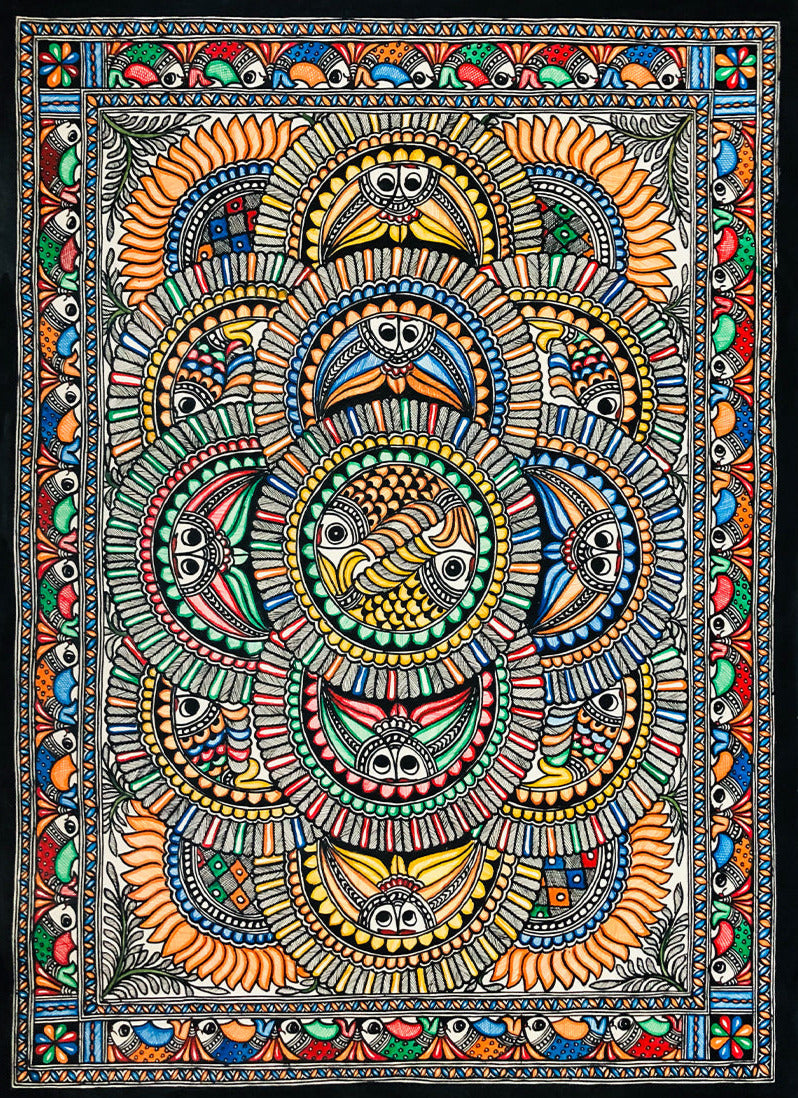
Known for its bold outlines, detailed fillings and absence of empty spaces, handmade Madhubani paintings continue to preserve centuries-old artistic traditions while adapting to modern aesthetics and contemporary interiors.
Key Features of Madhubani Art
Madhubani art is recognised for its intricate detailing, symbolic storytelling and vibrant visual depictions rooted in the cultural traditions of Mithila. Traditionally painted using natural pigments and handmade tools, the art form is characterised by dense compositions where every surface is filled with decorative patterns and motifs.
Traditional Madhubani paintings were closely tied to rituals and sacred spaces, especially during weddings and festivals. Even today, the symbolic richness of Madhubani art continues to distinguish it from other Indian folk painting traditions.
Some of the defining features of handmade Madhubani paintings include:
- Intricate linework and highly detailed surface ornamentation.
- Double - lined borders and decorative framing techniques.
- Flat application of colours without shading or perspective.
- Bright natural colours derived from turmeric, indigo, flowers, soot and minerals.
- Repetitive geometric, floral, and symbolic patterns.
- Themes inspired by mythology, nature, fertility, rituals and village life
- Stylised depictions of animals, birds, celestial bodies and deities.
-
Absence of empty space, with motifs and fillers covering the entire composition.
History of Madhubani Art
Origin of Madhubani Art
The origins of Madhubani art lie in the ritual and domestic practices of the Mithila region, where painting was an integral part of everyday cultural life. Traditionally, women created these paintings directly on freshly plastered mud walls, courtyards and floors of their homes using rice paste, natural dyes and handmade brushes crafted from bamboo twigs and cotton. The art form developed as a way to decorate sacred and domestic spaces during important occasions such as marriages, childbirth ceremonies, festivals and seasonal rituals.
Rather than being created as commercial artworks, early Madhubani paintings were deeply tied to community traditions and oral storytelling. Specific spaces within the home, such as the Kohbar Ghar (bridal chamber), were decorated with symbolic motifs associated with fertility, prosperity and protection. These paintings often featured lotus flowers, fish, bamboo groves, snakes and celestial symbols believed to bring blessings and harmony to the household.
The process of making Madhubani art was traditionally passed down through generations from mothers to daughters, making it both an artistic and cultural inheritance. Each community and caste group within Mithila developed distinct painting styles, motifs and techniques, contributing to the diversity of the Madhubani tradition seen today.
Evolution of Madhubani Art
Madhubani painting evolved significantly during the twentieth century as it transitioned from ritual wall art into a globally recognised folk art tradition. A major turning point came after the 1934 Bihar earthquake, when British civil servant William G. Archer documented the painted walls of Mithila homes, bringing wider attention to the art form.
Another transformative moment occurred during the droughts of the 1960s, when government and craft revival initiatives encouraged women artists to transfer their paintings from walls onto paper to generate income. This shift helped Madhubani paintings reach galleries, collectors and international audiences.
Over time, Madhubani painting expanded into multiple styles, each with distinct techniques and symbolism:
- Bharni: vibrant colour - filled compositions featuring deities and mythological themes
- Kachni: intricate linework and monochromatic detailing
- Godna: tattoo-inspired motifs and geometric patterns
- Tantrik: spiritually symbolic paintings based on Tantric imagery
- Kohbar: ritual paintings associated with marriage, fertility and prosperity
The evolution of Madhubani art also reflected changing social narratives. While traditional themes focused on mythology and ritual symbolism, contemporary artists gradually incorporated subjects such as environmental awareness, feminism, motherhood, caste identity and social justice.
Recognising its cultural and artistic importance, Madhubani painting was also granted the Geographical Indication (GI) tag, helping protect and preserve the authenticity of this traditional art form and its regional heritage.
Contemporary Madhubani Art
Today, contemporary Madhubani art preserves the traditional visual language of Mithila painting while embracing new mediums, formats, and interpretations. Handmade Madhubani paintings are now created on paper, canvas, textiles, ceramics, murals and home decor objects, allowing the art form to adapt to contemporary lifestyles.
Madhubani artists continue to use traditional motifs such as fish, lotus flowers, peacocks, celestial bodies and Hindu deities but often reinterpret them through contemporary compositions and themes. Artists also experiment with minimalist palettes, large-scale works, mixed media and modern interior - friendly formats while retaining the dense patterning and symbolic richness characteristic of the art form.
The growing global appreciation for Indian folk art has further strengthened the visibility of Madhubani painting in museums, galleries, fashion and contemporary design. Despite modern adaptations and commercialisation, the art form remains deeply rooted in storytelling, ritual traditions and the artistic legacy passed down across generations of Mithila artists.
Themes and Motifs of Madhubani Art
Nature in Madhubani Art
Nature is central to Madhubani painting traditions and reflects the intimate relationship between the Mithila community and the environment. Natural motifs are not merely decorative but deeply symbolic, often representing fertility, abundance, harmony, and continuity of life.
Common nature motifs in Madhubani art include:
- Lotus flowers: Lotus flowers are symbols of purity, spirituality and divine beauty
- Tree of life motifs: Tree of life motifs represent growth, interconnectedness and continuity.
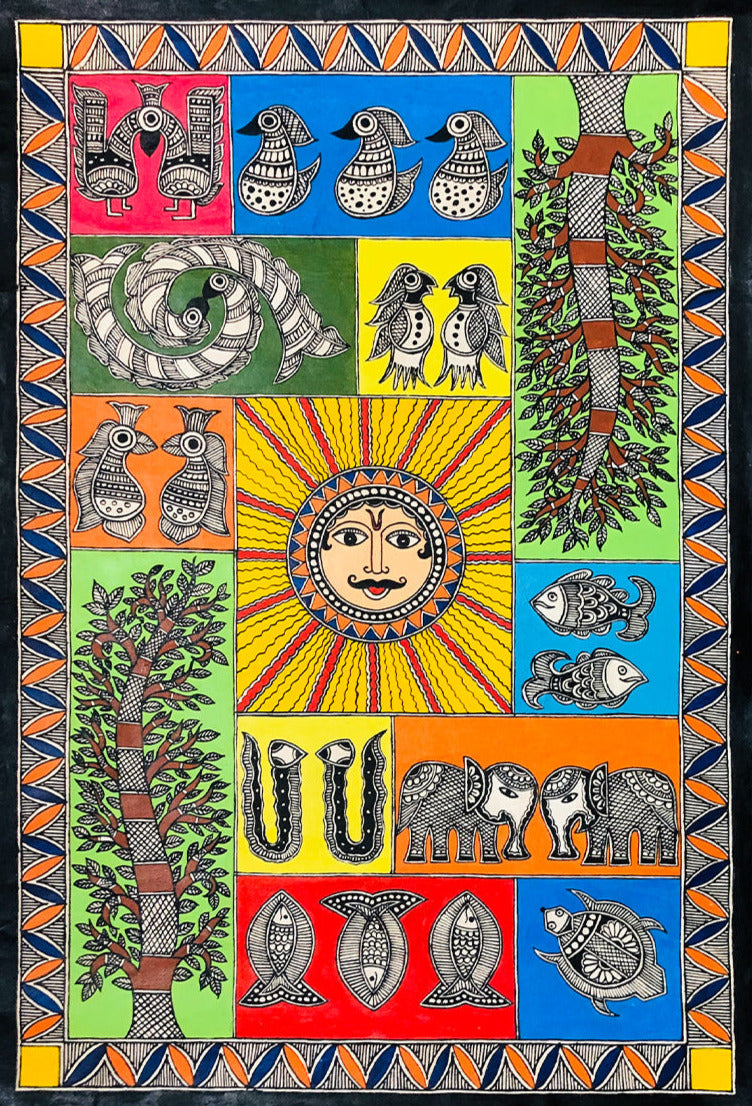
- Sun and moon depictions: associated with cosmic energy, eternity and balance
- Flowing vines and floral patterns: used to symbolise prosperity and natural harmony
- Water elements and rivers: representing fertility, nourishment and cyclical renewal
- Nature-inspired motifs are often combined with animals, deities and geometric fillers, creating highly rhythmic and visually balanced compositions.
Animals in Madhubani Art
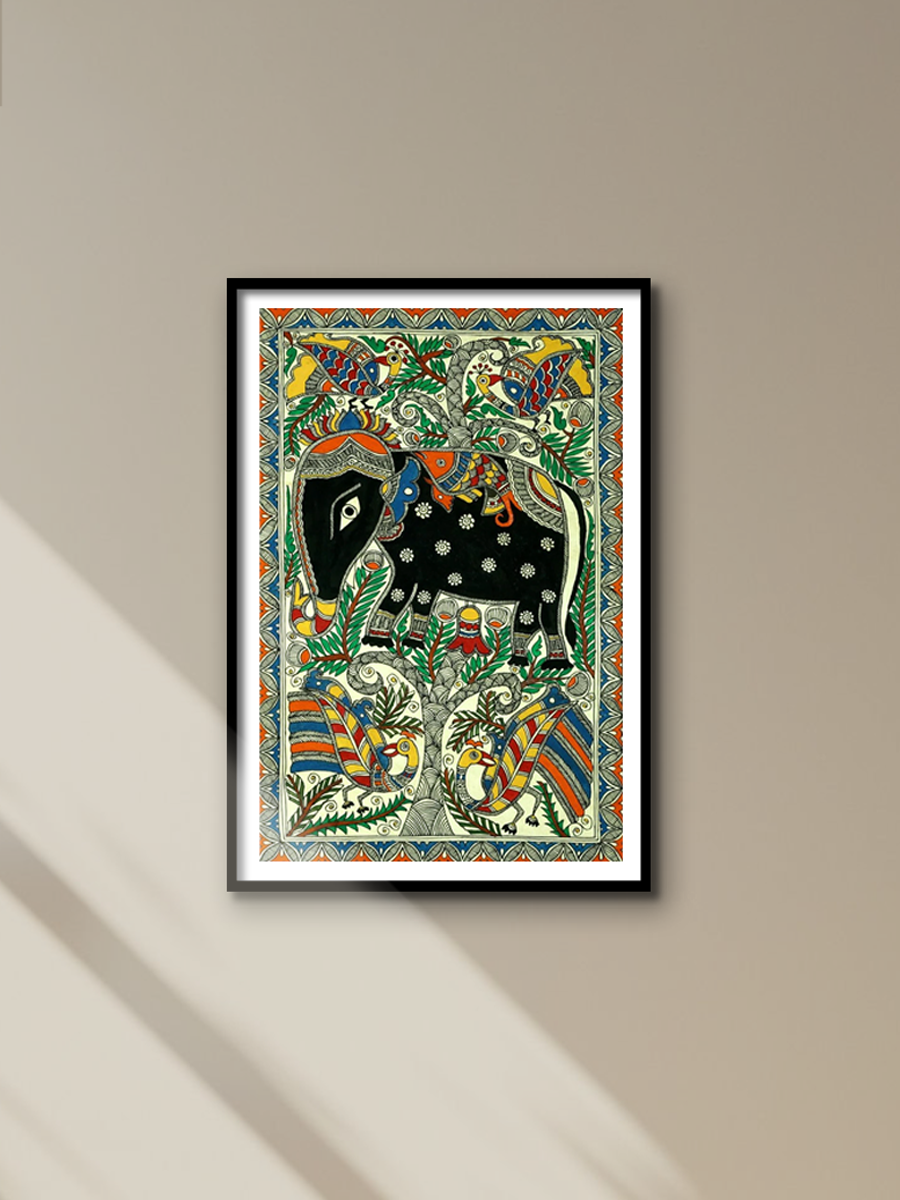
Animals are among the most significant symbolic elements in Madhubani painting and are depicted using stylised forms, intricate detailing and decorative patterns. Each animal carries cultural, spiritual or ritual significance within the Mithila tradition.
Common animal motifs include:
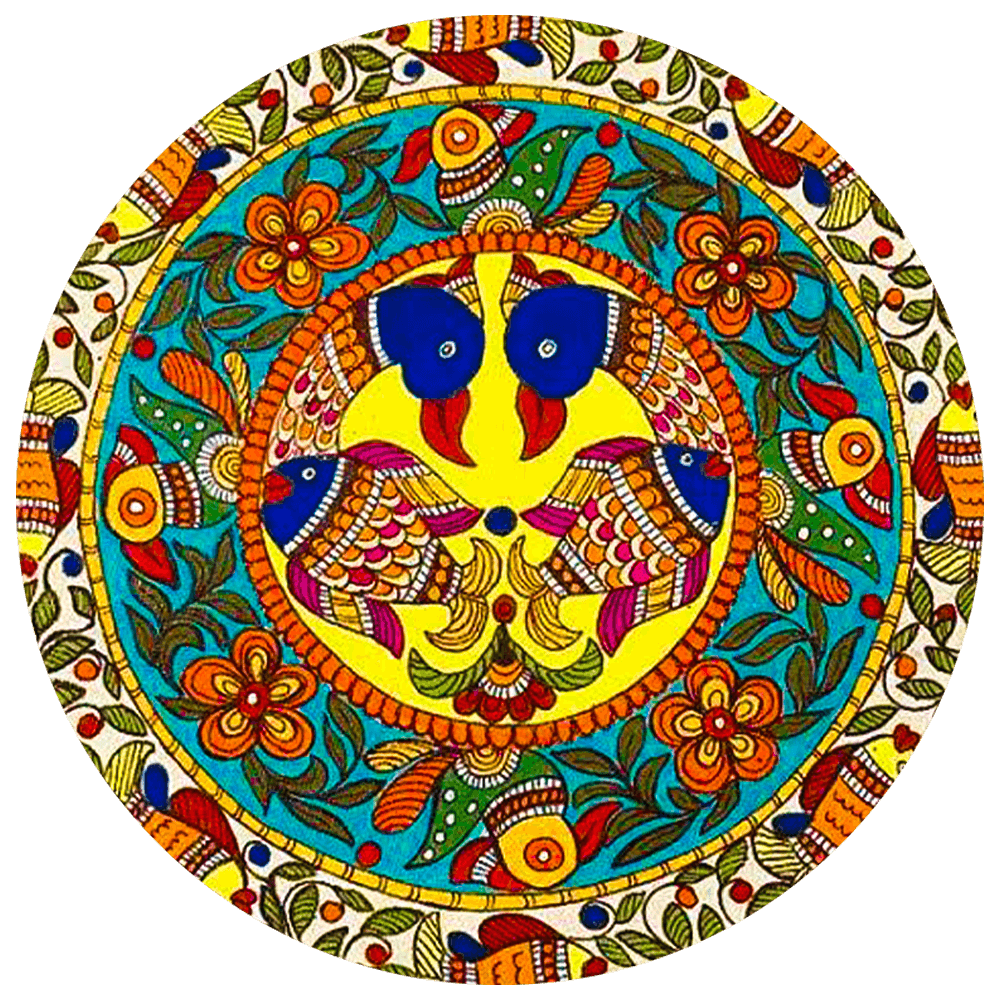
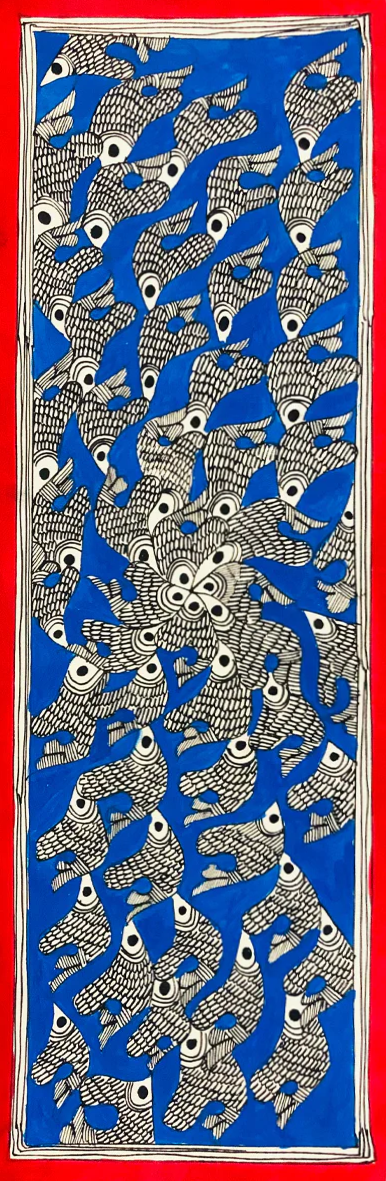
- Fish: symbols of fertility, prosperity, abundance and good fortune
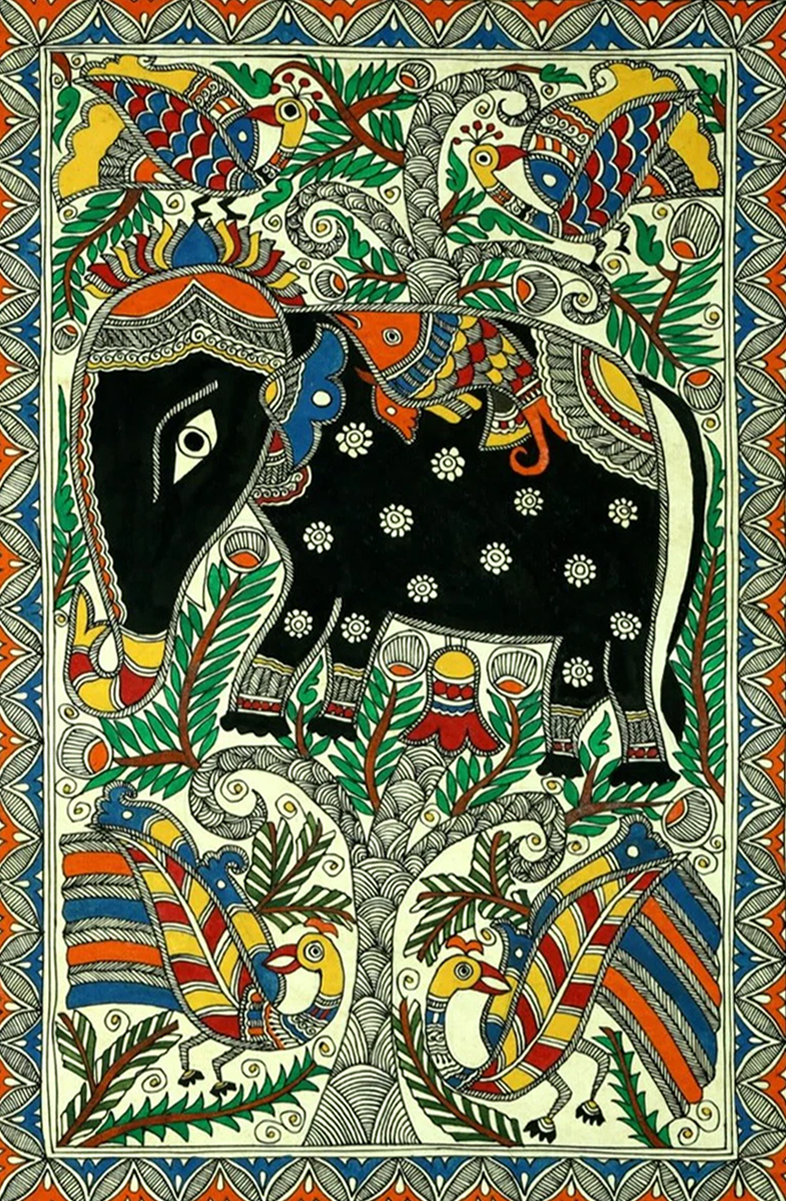
- Peacocks: associated with beauty, romance, celebration and the monsoon season
- Elephants: representing wisdom, strength, royalty and protection
- Turtles: symbols of endurance, stability and spiritual grounding
- Birds and parrots: signifying harmony, communication and the relationship between nature and humanity
- Snakes: Snakes are often linked to fertility, regeneration and protective energies in Kohbar paintings
- These motifs are frequently surrounded by floral patterns and geometric detailing, contributing to the dense decorative language of Madhubani art.
Deities in Madhubani Art
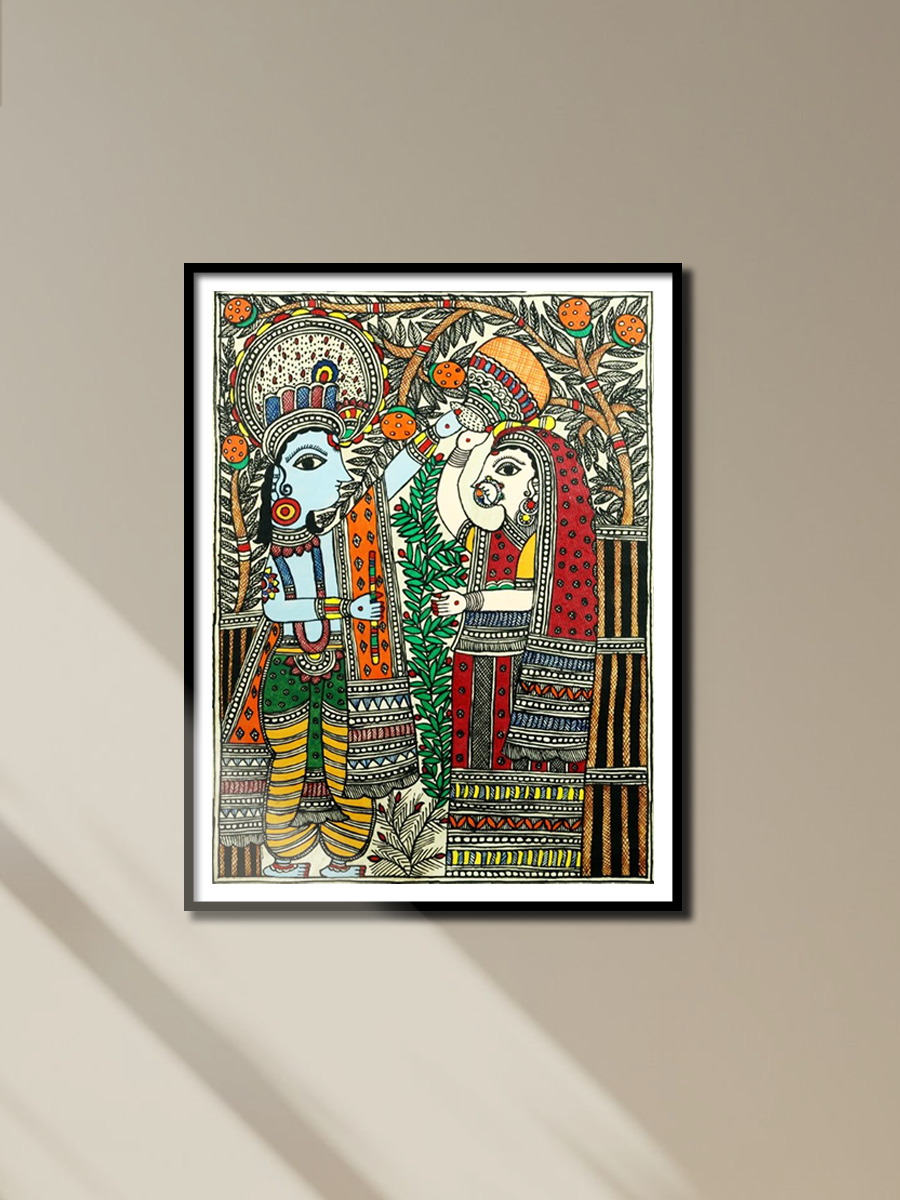
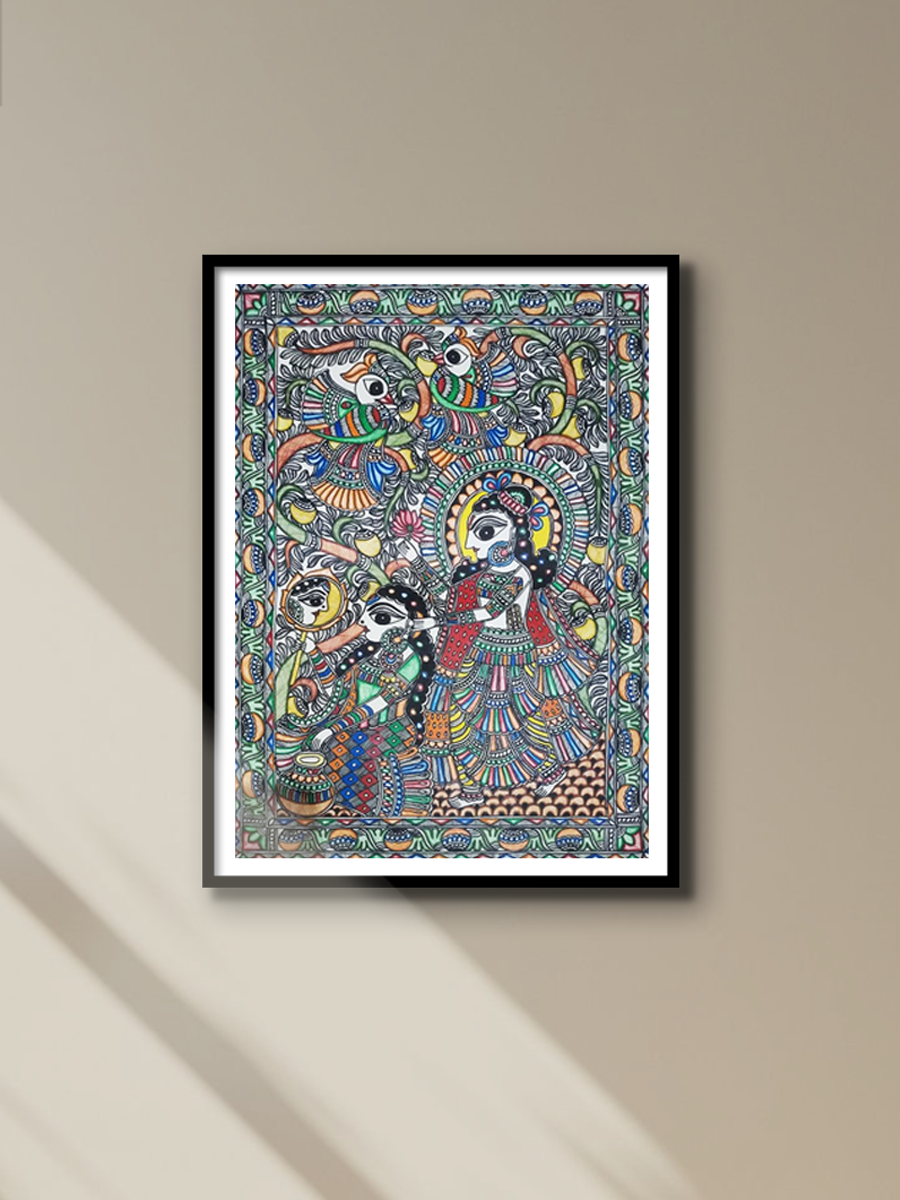
Religious and mythological themes form an essential part of Madhubani painting traditions. Handmade Madhubani paintings frequently depict scenes from Hindu epics and devotional imagery associated with spirituality, protection, love and prosperity.
Popular deities and subjects include:
- Lord Krishna: often shown with Radha or in Ras Leela scenes symbolising divine love.
- Lord Rama and Sita: inspired by episodes from the Ramayana.
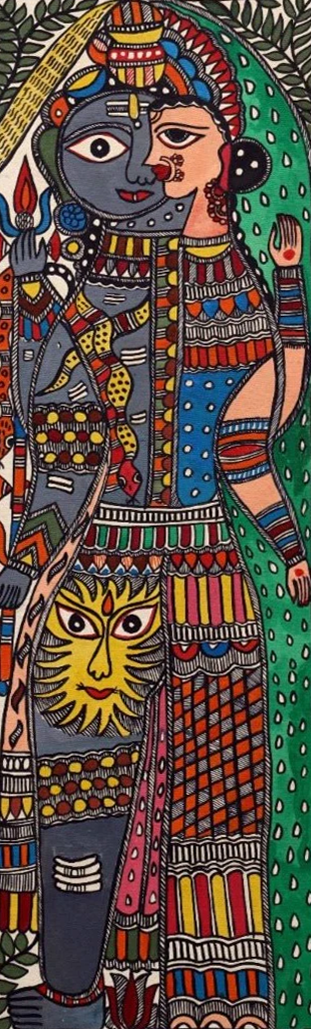
- Shiva Parvati: representing balance, union and marital harmony.
- Goddess Durga: symbolising feminine strength and divine protection.
- Lakshmi: associated with prosperity.
- Saraswati: wisdom, knowledge and arts.
- Ganesha: invoked for auspicious beginnings and success.
These devotional themes make Madhubani wall art especially popular for spiritual interiors, sacred spaces and traditional Indian home decor.
Madhubani Patterns
Patterns are fundamental to the visual identity of Madhubani painting and contribute to its highly decorative and immersive quality. Traditionally, artists filled every surface with repetitive motifs and ornamental detailing to avoid empty spaces, reflecting ideas of abundance and completeness.
Common Madhubani patterns include:
- Double-lined borders and intricate framing motifs.
- Triangular border, also called the singada border, representing water-chestnuts, found abundantly in the region.
- Repetitive dots, stripes and cross-hatching techniques.
- Floral vines and ornamental foliage patterns.
- Circular and mandala-inspired arrangements.
- Geometric grids and linear symmetry.
- Tattoo-inspired motifs seen in Godna style paintings.
- Symbolic fertility patterns used in Kohbar artworks.
- The interplay between patterns, figures and symbolic motifs creates the rich visual rhythm that defines authentic handmade Madhubani paintings.
How Madhubani Paintings are made
Natural pigments used in Madhubani paintings
Traditionally, Madhubani artists created colours using natural materials sourced from their surroundings. These pigments were handmade using flowers, minerals, soot, leaves and plant extracts, giving the paintings their earthy vibrancy and organic texture.
- Some traditional pigment sources include:
- Black from soot and charcoal
- Yellow from turmeric
- Blue from indigo
- Red from kusum flowers and red sandalwood
- Green from leaves and plant extracts
- White from rice paste
- Even today, many handmade Madhubani paintings continue to preserve these traditional methods to maintain authenticity and cultural continuity.
Colors used in Madhubani paintings
Madhubani paintings are known for their bold and vibrant colour palettes. Traditionally, colours were applied in flat tones without shading, creating strong visual contrast and decorative impact.
Common colours used in Madhubani wall art include -
- Red for passion, celebration and fertility
- Yellow for spirituality and auspiciousness
- Green for growth and harmony
- Blue for divinity and cosmic energy
-
Black for outlines and structural detailing
Contemporary Madhubani artists often experiment with muted palettes and monochromatic styles while still preserving the traditional visual structure of the art form.
Traditional Brushes and Tools Used in Madhubani Painting
Traditional Madhubani paintings were created using handmade tools crafted from locally available materials. Artists often used -
- Bamboo twigs for outlines and detailing
- Cotton-wrapped sticks for colour application
- Matchsticks and fingers for freehand motifs
- Homemade nibs for fine linework and patterns
- The freehand nature of these techniques gives handmade Madhubani paintings their unique rhythm, spontaneity and artisanal character
Famous Madhubani Artists
Ambika Devi
Ambika Devi is a nationally awarded Madhubani artist from Bihar known for her intricate Kachni style paintings characterised by delicate linework and symbolic detailing. Her artworks often depict themes from mythology, nature, village life and women’s experiences while preserving the traditional visual language of Mithila painting. She continues to work with traditional techniques and natural pigments, contributing significantly to the preservation and global recognition of Madhubani art.
Avinash Karn
Avinash Karn is a contemporary Madhubani artist from Ranti, Bihar, and a third-generation practitioner of the Mithila painting tradition. His works blend traditional Madhubani techniques with contemporary subjects such as cityscapes, cinema, and social narratives, creating a fresh perspective within the folk art form. Inspired by renowned artist Ganga Devi, he is known for his intricate detailing, vibrant compositions, and efforts to preserve lesser-known Madhubani traditions like Godna art.
Izhar Ansari
Izhar Ansari is a Madhubani artist known for blending traditional Mithila painting techniques with contemporary themes and detailed craftsmanship. His works often feature intricate patterns, vibrant colours, and symbolic motifs inspired by nature, mythology, and everyday life. Through his practice, he contributes to preserving and evolving the visual traditions of handmade Madhubani art.
Pratima Bharti
Pratima Bharti is a Madhubani artist known for her vibrant compositions and intricate Mithila painting techniques rooted in traditional folk art practices. Her works often depict themes inspired by mythology, village life, nature and feminine experiences through dense patterns and symbolic detailing. Through her practice, she continues to preserve the cultural and visual richness of authentic handmade Madhubani art.
Priti Karn
Priti Karn is a Madhubani artist from Bihar with over three decades of experience in Mithila painting traditions. Trained under her grandmother, Padmashri awardee Godawari Dutta, she is known for her vibrant compositions, intricate detailing and exploration of themes such as mythology, peacocks, fish and feminine narratives. Alongside Madhubani painting, she also practises Godhana art and works with natural pigments, blending traditional craftsmanship with contemporary artistic expression.
Madhubani Art for Home Decor
Madhubani art brings colour, storytelling and cultural richness into contemporary and traditional interiors alike, making it the perfect addition to all homes. With its intricate patterns, symbolic motifs and vibrant compositions, handmade Madhubani wall art can transform any space into a visually engaging and meaningful environment. For collectors and art enthusiasts looking to buy Madhubani paintings online, these artworks offer a timeless blend of traditional craftsmanship and contemporary decor appeal.
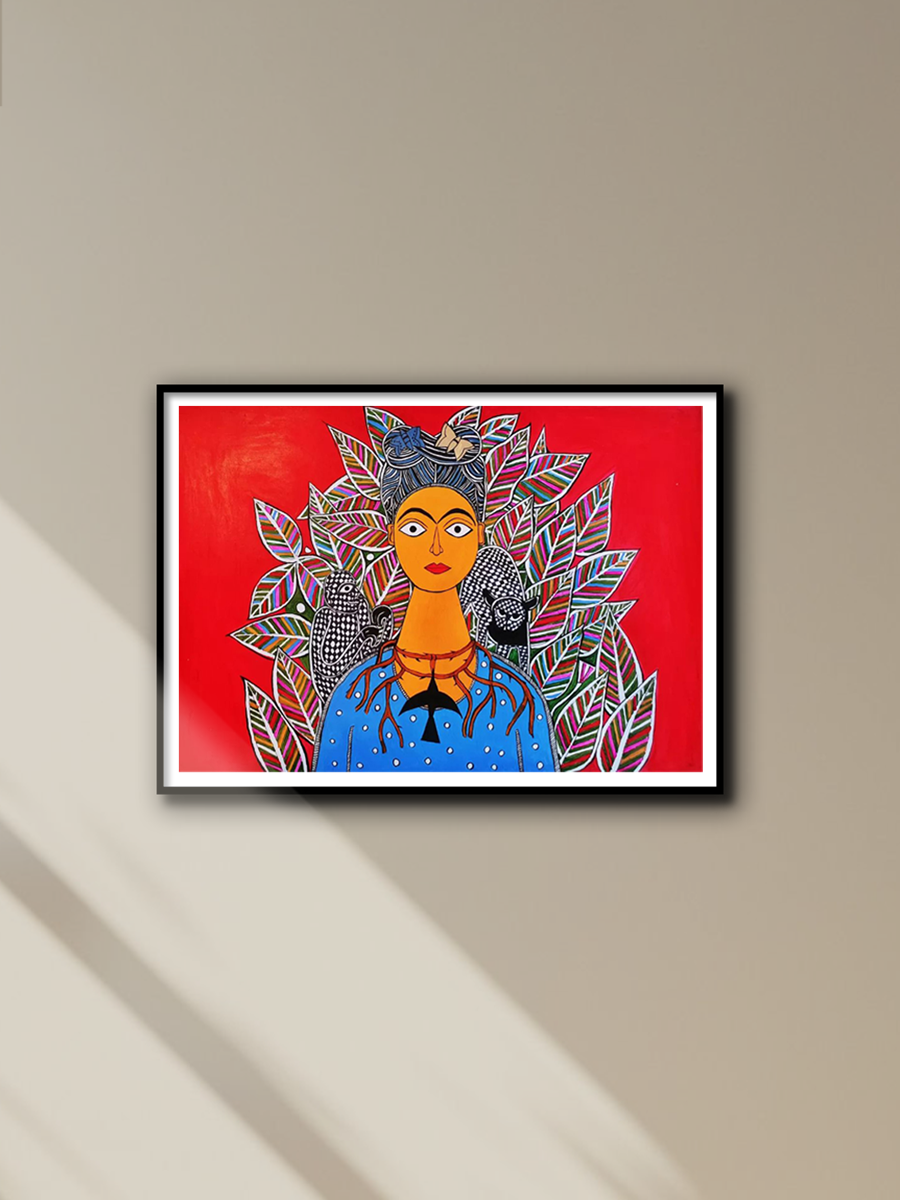
From authentic Mithila paintings rooted in centuries-old folk traditions to contemporary compositions suited for modern interiors, Madhubani artworks work beautifully across different spaces. Framed Madhubani artwork featuring mythological scenes, nature motifs, peacocks, fish, lotus flowers, and sacred symbols can instantly elevate the visual character of a room while adding cultural depth and artistic warmth.
-
Living Room Decor: Large Madhubani paintings featuring nature, peacocks, fish or mythological scenes create striking focal points for living rooms.
-
Pooja Room Decor: Devotional Madhubani paintings depicting Krishna, Rama Sita, Shiva Parvati, Durga and sacred motifs add spiritual warmth and artistic beauty to pooja rooms and prayer spaces.
-
Kids Room Decor: Madhubani paintings featuring animals, birds, trees and playful folk motifs bring storytelling, colour and creativity into kids’ rooms.
-
Bedroom Decor: Softer Madhubani compositions with lotus motifs, nature-inspired themes and harmonious patterns create calming and artistic bedroom interiors.
Madhubani Art for Gifting
Madhubani art makes for a thoughtful and meaningful gift for weddings, housewarmings, anniversaries, festive celebrations and special occasions. Rich in symbolism and handcrafted beauty, these artworks celebrate Indian heritage while adding artistic warmth to contemporary homes.
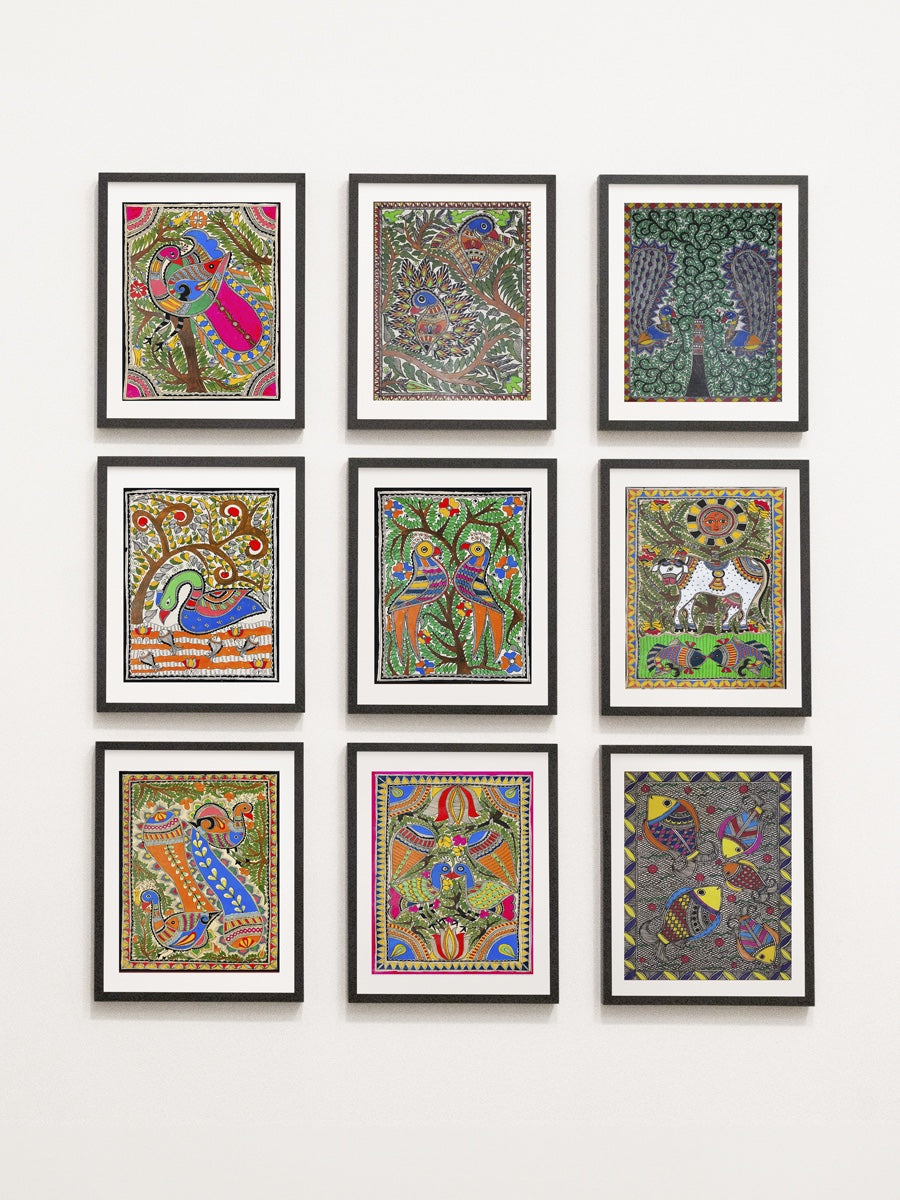
Handmade Madhubani paintings featuring mythological themes, sacred symbols, animals and nature motifs are especially popular as gifts because of their timeless appeal and cultural significance. Whether gifted as standalone artworks or as part of a curated gallery wall arrangement, Madhubani art offers a unique blend of storytelling, craftsmanship and decor value.
From vibrant folk compositions to intricate handmade paintings, Madhubani artworks make memorable gifts for art lovers, collectors and anyone who appreciates traditional Indian art.
How to Identify Authentic Madhubani Art?
When identifying authentic Madhubani paintings, look for:
- Intricate double outlines and detailed cross-hatching
- Completely filled compositions with minimal empty space
- Traditional motifs such as fish, lotus flowers, peacocks, the sun, moon and deities
- Visible brush or pen strokes instead of digitally uniform lines
- Handmade paper, cloth or canvas with natural textures
- Natural or hand-mixed pigments with matte and layered finishes
- Artist signatures, provenance details or certificates of authenticity
Buying from trusted galleries and platforms that work directly with Madhubani artists also helps ensure authenticity, craftsmanship, and cultural integrity.
FAQs About Madhubani Art
Are there different styles of Madhubani painting?
Yes, Madhubani painting includes several traditional styles such as Bharni, Kachni, Tantrik, Godna and Kohbar. Each style has its own visual language, motifs, colour palette and techniques. Bharni style is known for vibrant colour filling, while Kachni focuses on intricate linework and detailing.
What are the common themes in Madhubani art?
Common themes in handmade Madhubani paintings include Hindu mythology, nature, fertility symbols, village life, animals, birds, celestial bodies and scenes from epics such as the Ramayana and Mahabharata. Motifs like fish, lotus flowers, peacocks and the sun are especially significant in Mithila painting traditions.
How can I display Madhubani paintings in my home?
Madhubani wall art can be framed and displayed in living rooms, bedrooms, pooja rooms, hallways or gallery walls. Their vibrant colours and intricate patterns make them ideal statement pieces for both contemporary and traditional interiors. Handmade Madhubani paintings can also be incorporated into decorative panels and curated wall arrangements.
Is Madhubani art suitable for modern interiors?
Yes, contemporary Madhubani art blends beautifully into modern homes. While traditional works feature vibrant folk-inspired palettes, many contemporary Madhubani artists also create minimalist and monochromatic compositions suited for modern interior aesthetics.
How do I care for a Madhubani painting?
To preserve a handmade Madhubani painting, avoid direct sunlight, moisture and excessive humidity. Dust the artwork gently using a soft dry cloth and frame it properly to maintain the vibrancy of the colours and intricate detailing over time.
Are Madhubani paintings handmade?
Authentic Madhubani paintings are traditionally handmade using fine linework, natural or acrylic pigments and freehand techniques. Many artists continue to use traditional methods inspired by Mithila painting practices passed down through generations.
Why is Madhubani art significant?
Madhubani art is an important cultural and artistic tradition of the Mithila region that reflects centuries of storytelling, ritual practices, mythology and community identity. Beyond its aesthetic value, the art form also supports rural artisan communities and preserves India’s rich folk art heritage.
Can Madhubani paintings be gifted?
Yes, Madhubani paintings make meaningful gifts for weddings, housewarmings, anniversaries, festivals and special occasions. Their handcrafted beauty, cultural significance and symbolic motifs make them thoughtful gifts for art collectors and lovers of Indian heritage art.
Authentic Madhubani paintings are completely handmade and are recognised for their intricate freehand detailing, dense patterns, symbolic motifs, and vibrant compositions. One of the key characteristics of original Mithila paintings is that artists traditionally draw directly without pencil sketches, resulting in slight irregularities and organic linework that reflect the human hand.
What is the GI tag of Madhubani painting?
Madhubani painting received the Geographical Indication (GI) tag in 2007, recognising it as a traditional art form uniquely associated with the Mithila region of Bihar. A GI tag helps protect the cultural identity, authenticity and heritage of regional crafts and ensures that only artworks originating from the recognised geographical region can officially be identified as authentic Madhubani or Mithila paintings.
The GI recognition also supports traditional Madhubani artists and artisan communities by preserving indigenous techniques, motifs and craftsmanship passed down through generations. It plays an important role in safeguarding handmade Madhubani art from mass-produced imitations while promoting the global recognition of this iconic Indian folk art tradition.
Explore the rich visual language and storytelling traditions of Mithila painting through MeMeraki’s curated collection of contemporary and traditional artworks. From intricate folk compositions and devotional themes to nature-inspired motifs and handmade detailing, our collection celebrates the diversity and craftsmanship of this iconic Indian art form.
Whether you are looking to explore Madhubani collection pieces for your home, discover handmade Madhubani paintings by renowned artists or shop authentic Mithila art rooted in heritage and tradition, MeMeraki brings together thoughtfully curated artworks that blend cultural significance with contemporary aesthetics.











 Request Price