Featured on Architectural Digest and Elle Decor ◆ 20,000+ Happy Customers ◆ Secure World Wide Shipping ◆ 4.8 Stars on Google ◆ 300+ Artforms ◆ Authentic Handmade Artworks ◆ Personalised Customer Support ◆ Authenticity Certificates ◆ Featured on AD and Elle Decor ◆ 20,000+ Happy Customers ◆ Secure World Wide Shipping ◆ 4.8 Stars on Google ◆ 300+ Artforms ◆ Authentic Handmade Artworks ◆ Personalised Customer Support ◆ Authenticity Certificates ◆ Featured on AD and Elle Decor ◆ 20,000+ Happy Customers ◆ Secure World Wide Shipping ◆ 4.8 Stars on Google ◆ 300+ Artforms ◆ Authentic Handmade Artworks ◆ Personalised Customer Support ◆ Authenticity Certificates ◆ Featured on Architectural Digest and Elle Decor ◆ 20,000+ Happy Customers ◆ Secure World Wide Shipping ◆ 4.8 Stars on Google ◆ 300+ Artforms ◆ Authentic Handmade Artworks ◆ Personalised Customer Support ◆ Authenticity Certificates ◆ Featured on Architectural Digest and Elle Decor ◆ 20,000+ Happy Customers ◆ Secure World Wide Shipping ◆ 4.8 Stars on Google ◆ 300+ Artforms ◆ Authentic Handmade Artworks ◆ Personalised Customer Support ◆ Authenticity Certificates ◆ Featured on Architectural Digest and Elle Decor ◆ 20,000+ Happy Customers ◆ Secure World Wide Shipping ◆ 4.8 Stars on Google ◆ 300+ Artforms ◆ Authentic Handmade Artworks ◆ Personalised Customer Support ◆ Authenticity Certificates ◆ Featured on Architectural Digest and Elle Decor ◆ 20,000+ Happy Customers ◆ Secure World Wide Shipping ◆ 4.8 Stars on Google ◆ 300+ Artforms ◆ Authentic Handmade Artworks ◆ Personalised Customer Support ◆ Authenticity Certificates ◆ Featured on Architectural Digest and Elle Decor ◆ 20,000+ Happy Customers ◆ Secure World Wide Shipping ◆ 4.8 Stars on Google ◆ 300+ Artforms ◆ Authentic Handmade Artworks ◆ Personalised Customer Support ◆ Authenticity Certificates
Hear what leading voices in design and craft have to say about MeMeraki.
"
Loading testimonials...
About Pichwai Paintings
What is Pichwai Painting?
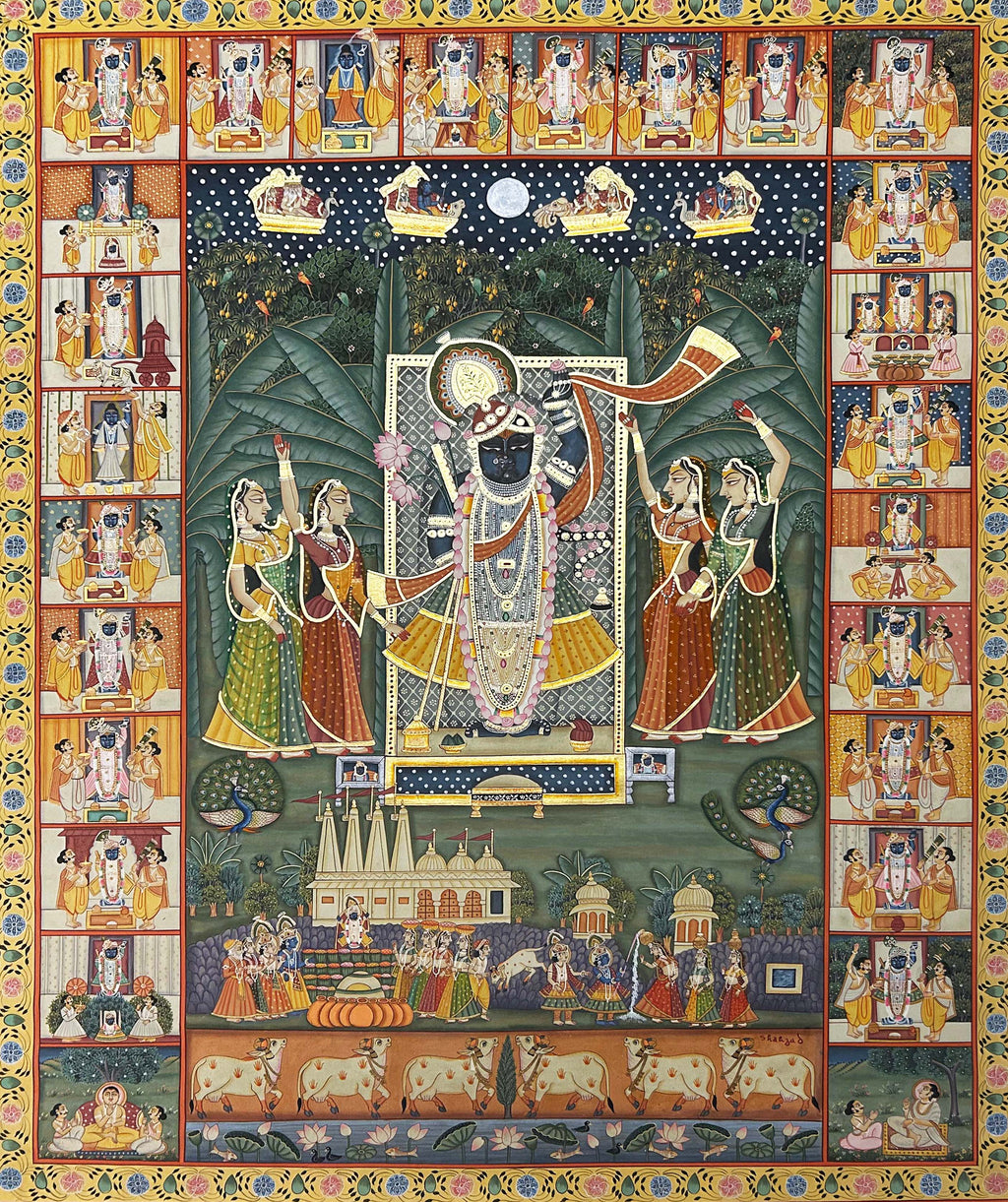
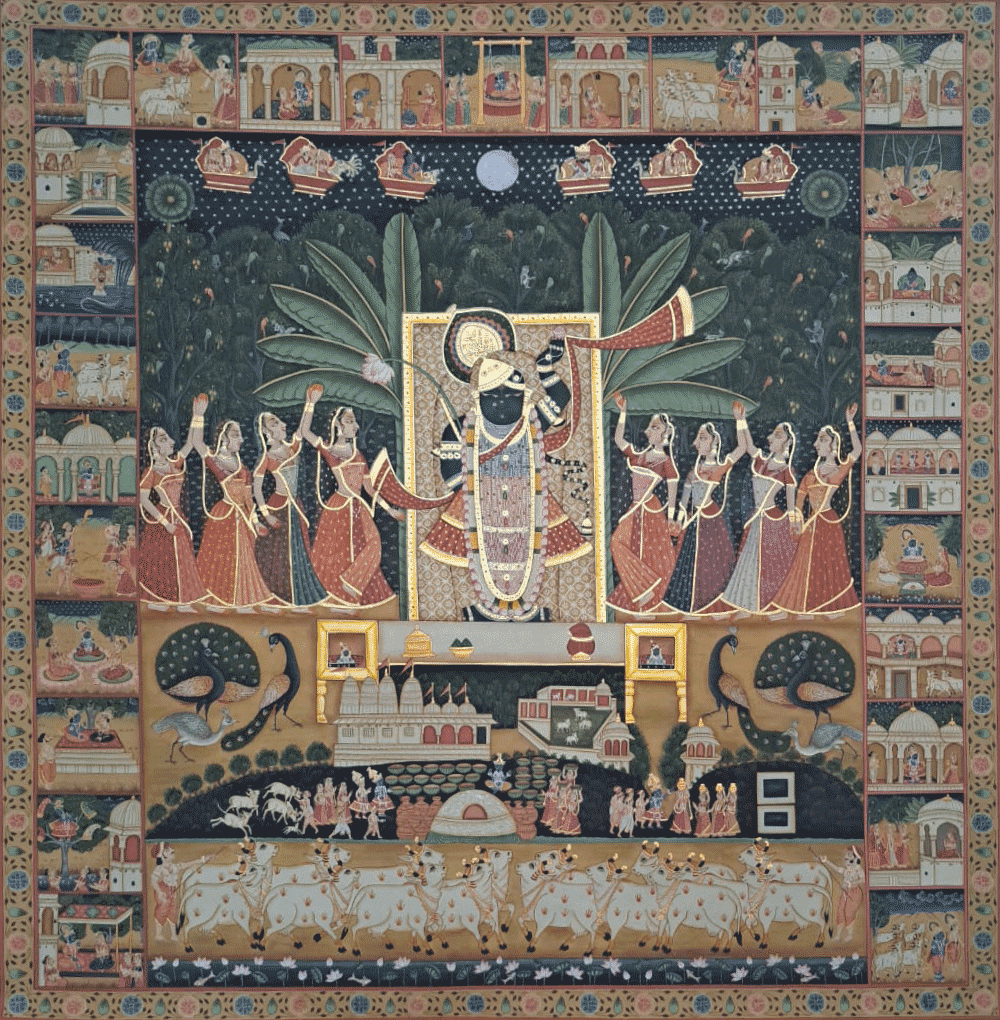
Pichwai painting (also spelled Pichhavai, Pichhvai, or Pechhavai) is a GI-tagged traditional Indian devotional art form that originated over 400 years ago in Nathdwara, Rajasthan. The word “Pichwai” comes from “pich” meaning “back” and “wai” meaning “hanging,” referring to the elaborate painted textile backdrops displayed behind the idol of Shrinathji in temples.
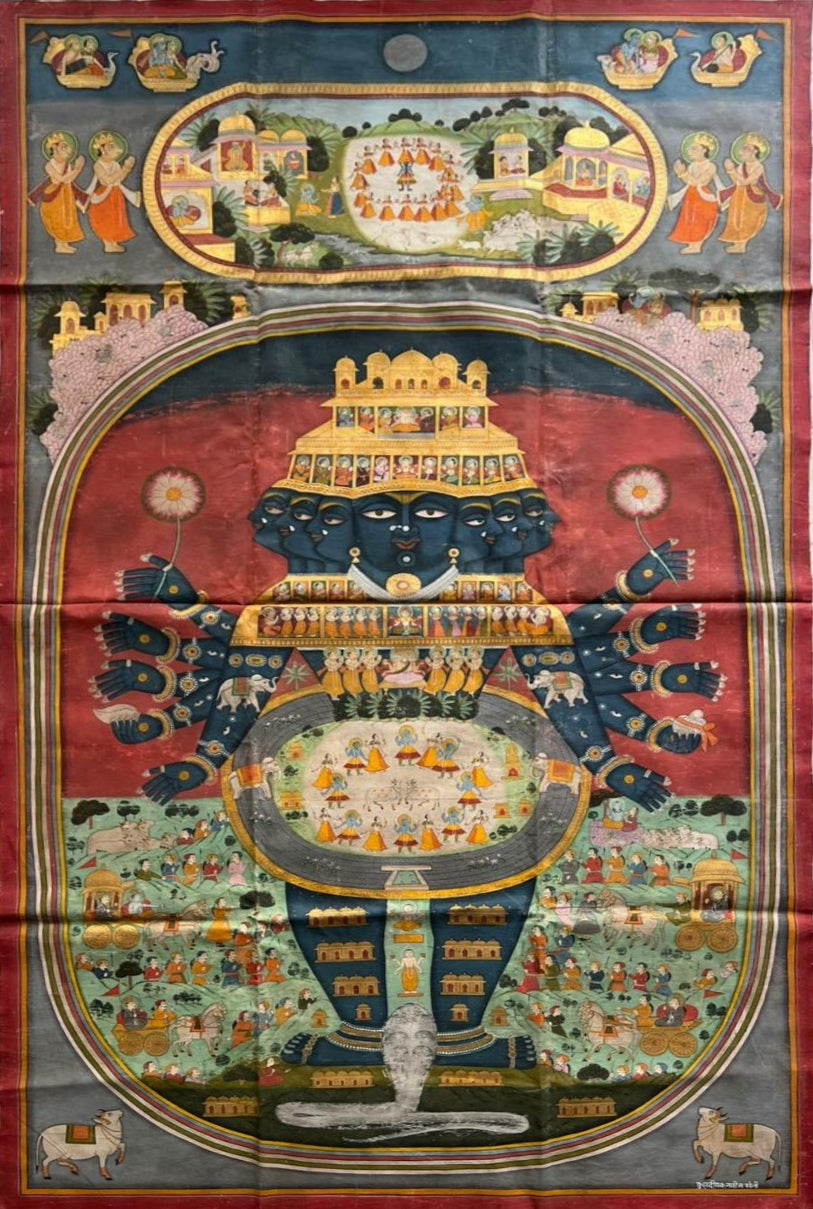
Traditionally created as temple hangings for Shrinathji, a seven-year-old child form of Lord Krishna worshipped in the Pushtimarg tradition, Pichwai paintings depict Krishna’s divine leelas, cows, lotus ponds, peacocks, seasonal festivals and scenes from temple rituals. Over time, this intricate art form evolved beyond temple spaces into collectible artworks and contemporary home decor including framed canvases, wall art and luxury statement paintings.
Today, authentic Nathdwara Pichwai paintings are celebrated for their devotional symbolism, intricate detailing, rich ornamentation and timeless aesthetic appeal that beautifully blends heritage craftsmanship with contemporary interiors.
Key Features of Pichwai Painting
Pichwai paintings are recognised for their intricate detailing, spiritual storytelling and rich decorative compositions inspired by Nathdwara temple traditions. Originally created as devotional temple backdrops, these artworks combine miniature-style precision with symbolic imagery rooted in Krishna worship.
Some defining features of traditional and contemporary Pichwai paintings include:
Intricate hand-painted detailing and ornamental borders
Depictions of Shrinathji, Krishna, cows, peacocks, lotus ponds, and temple rituals
Fine brushwork inspired by miniature painting traditions
Sacred symbolism associated with devotion, prosperity and abundance
Large-format compositions traditionally painted on cloth
Contemporary Pichwai paintings continue to preserve these traditional elements while adapting them into modern colour palettes, minimalist compositions and interior-friendly formats.
History of Pichwai Painting
Origin of Pichwai Painting
The origins of Pichwai painting trace back to the 17th century when the idol of Shrinathji was moved from Mathura to Nathdwara in Rajasthan to protect it during Mughal invasions. According to legend, the bullock cart carrying the deity became stuck near Nathdwara, which devotees interpreted as a divine sign that Shrinathji wished to reside there permanently. This led to the establishment of the famous Shrinathji Temple, which became the spiritual and artistic centre of Pichwai painting traditions.
Temple artists began creating elaborate painted cloth backdrops to adorn the sanctum of Shrinathji during rituals, festivals and seasonal celebrations. These artworks depicted Krishna’s divine acts, temple festivities, lotus gardens, cows, peacocks and Raas Leela scenes, eventually becoming an essential part of Nathdwara temple culture.
Evolution of Pichwai Painting
Over centuries, Pichwai paintingevolved from ritual temple textiles into one of India’s most celebrated devotional art forms. Traditional Pichwais were initially painted exclusively on hand-spun cloth using natural pigments, mineral colours and gold embellishments.
Originally, Pichwai paintings were created as decorative backdrops placed behind the idol of Shrinathji in Nathdwara temples. Because their purpose was to frame and enhance the deity during rituals and festivals, early Pichwais often focused on elaborate lotus ponds, cows, peacocks, seasonal landscapes and temple-inspired ornamentation rather than depicting Shrinathji himself.
As the art form evolved beyond temple spaces and entered homes, galleries and contemporary interiors, artists began incorporating Shrinathji directly into the compositions, transforming Pichwai paintings into devotional artworks as well as decorative wall art. Today, Shrinathji Pichwai paintings are among the most recognised and collected forms of Nathdwara art.
Over time, artists also introduced increasingly elaborate detailing, decorative layering and thematic variations including Shrinathji Pichwai paintings, Kamdhenu Pichwai paintings, Lotus or Kamal Talai Pichwai, Raas Leela depictions, Cow and pastoral Krishna scenes, Festival-inspired Pichwai artworks, etc.
With growing global appreciation for Indian heritage art, Pichwai painting gradually moved beyond temple spaces into galleries, collectors’ homes, luxury interiors and contemporary art spaces.
Contemporary Pichwai Painting
Today, contemporary Pichwai paintings blend traditional Nathdwara craftsmanship with modern aesthetics and interior styling. Artists reinterpret classic motifs such as lotus ponds, cows, peacocks, Shrinathji and Krishna Leelas through contemporary palettes, minimalist compositions, monochromatic works and textured surfaces suitable for modern homes.
Modern Pichwai paintings are now widely used as statement wall art for living rooms, spiritual interiors, luxury hospitality spaces and curated art collections. Alongside traditional cloth Pichwais, artists also experiment with canvas, wooden panels, mixed media and large-scale contemporary compositions while preserving the devotional essence of the art form.
Pichwai Painting Themes and Motifs
Pichwai Cow Paintings
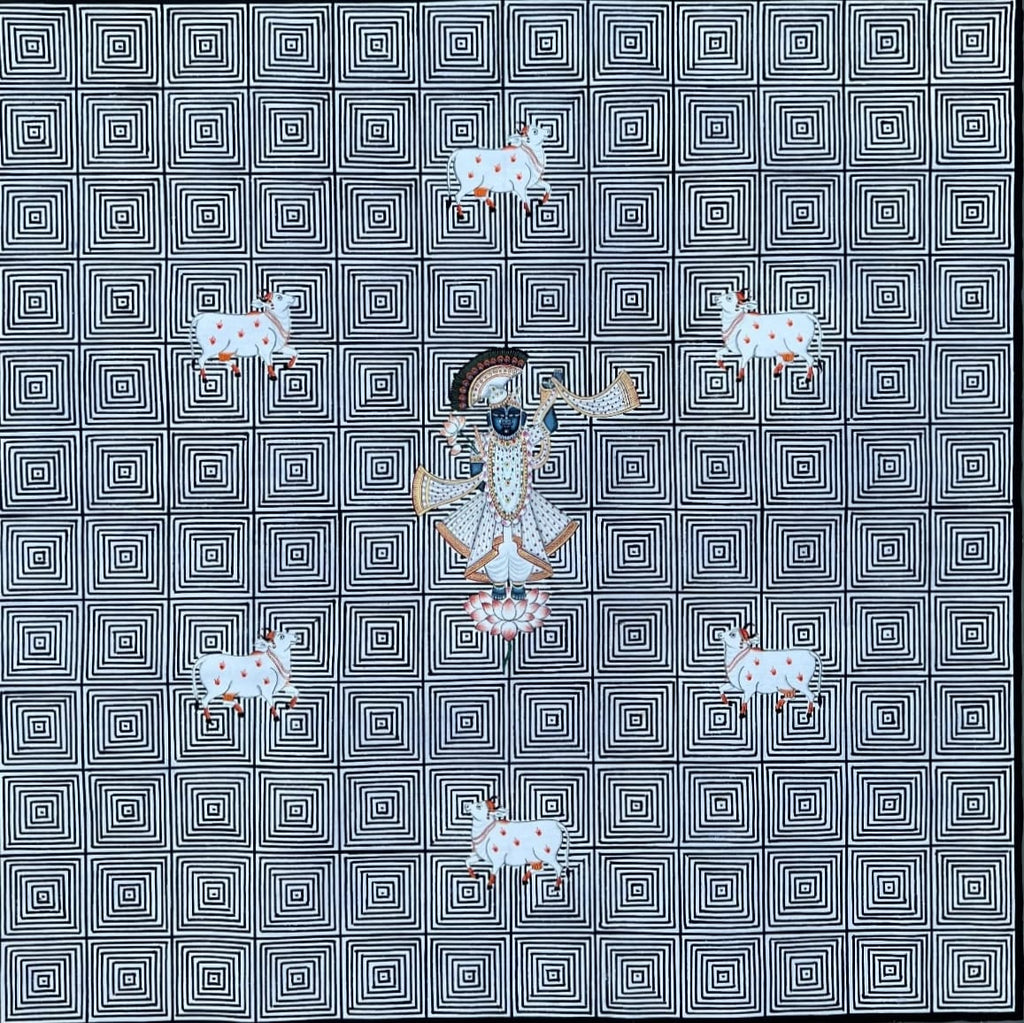
Cows are among the most iconic motifs in Pichwai painting and symbolise divinity, abundance, purity and Krishna’s pastoral life, highlighting his role as Gopala - the divine cowherd and protector of cattle. Pichwai cow paintings often depict richly ornamented cows surrounded by lotus flowers, decorative patterns, temple landscapes and celestial motifs.
Kamdhenu Pichwai paintings, featuring the sacred wish-fulfilling cow, are especially significant and are associated with prosperity, blessings and spiritual abundance. These artworks are widely used in home decor because of their symbolic richness and timeless visual appeal.
Shrinathji Pichwai Paintings
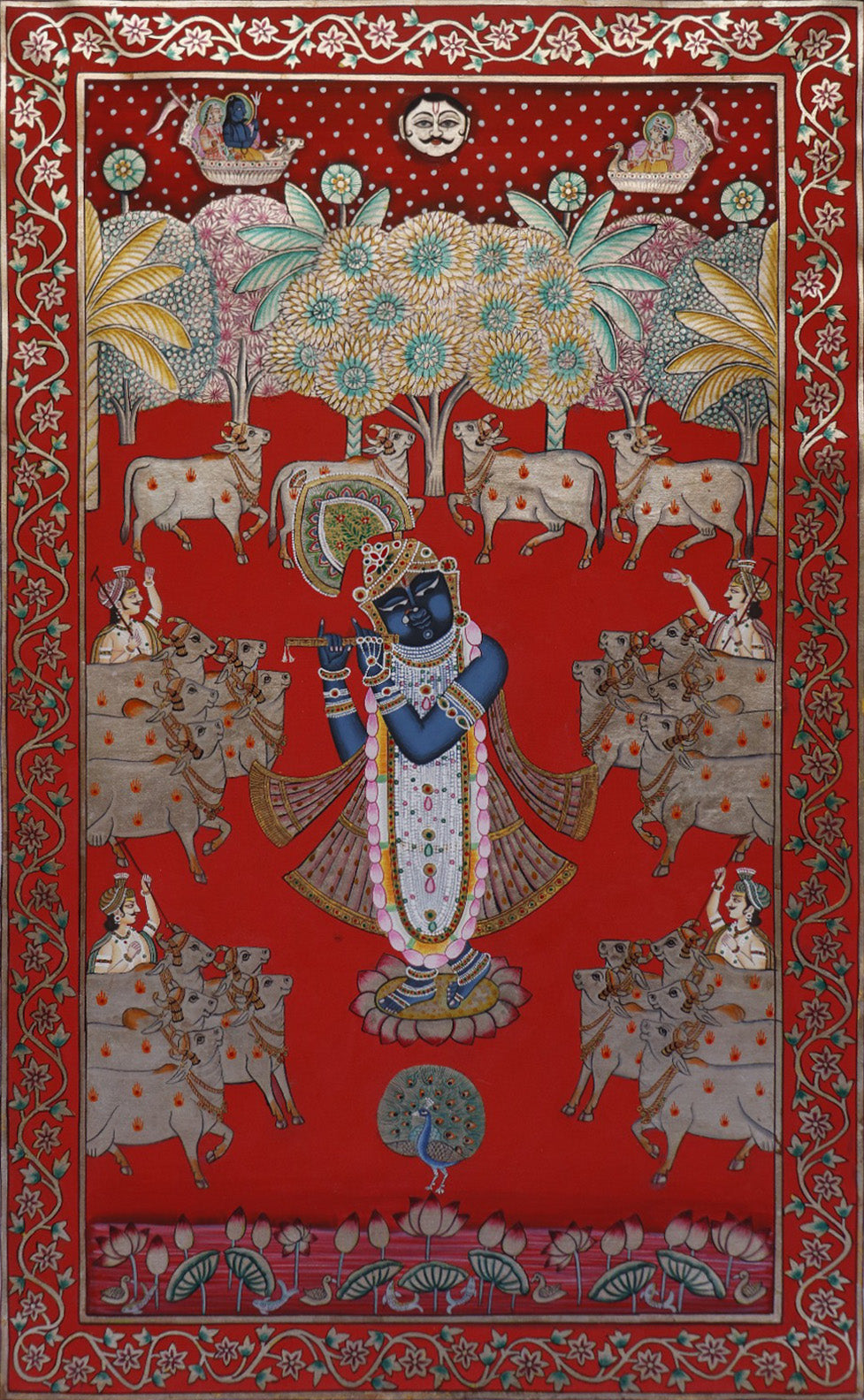
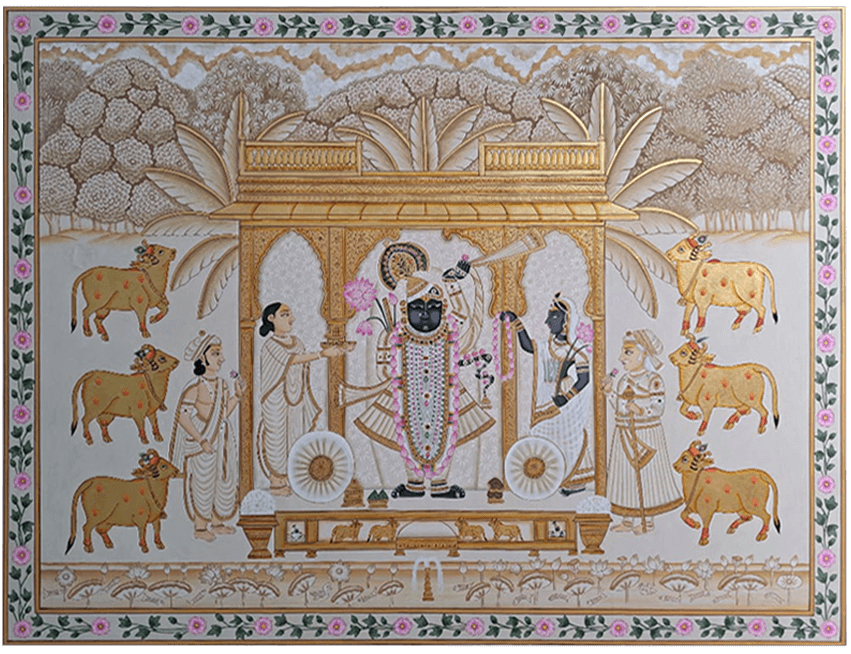
Shrinathji is the central figure in traditional Pichwai art and is depicted in multiple forms associated with Krishna’s divine acts and temple rituals. Popular representations include Govardhan-dharan, Raas Leela, Daan Leela and festival adornments inspired by Nathdwara temple celebrations.
Shrinathji Pichwai paintings are characterised by intricate detailing, rich ornamentation, devotional symbolism and highly decorative compositions rooted in Pushtimarg traditions.
Krishna in Pichwai Paintings
Krishna is one of the most important subjects in Pichwai painting traditions and is often portrayed through scenes celebrating his divine childhood, Raas Leela, flute-playing, slaying demons and pastoral life in Vrindavan.
Artists frequently depict Krishna surrounded by cows, lotus ponds, peacocks, gopis and temple landscapes, symbolising divine love, harmony, devotion and abundance. Krishna Pichwai paintings remain among the most popular forms of devotional Indian art for collectors and spiritual interiors alike.
Festivals in Pichwai Paintings
Festivals and seasonal celebrations play a major role in Pichwai art traditions. Temple Pichwais were historically created to reflect different occasions celebrated in Nathdwara, with each artwork corresponding to specific rituals, weather cycles and festivities.
These artworks capture the vibrant devotional atmosphere of temple festivities while showcasing the artistic richness of Nathdwara traditions.
Pichwai Lotus Paintings
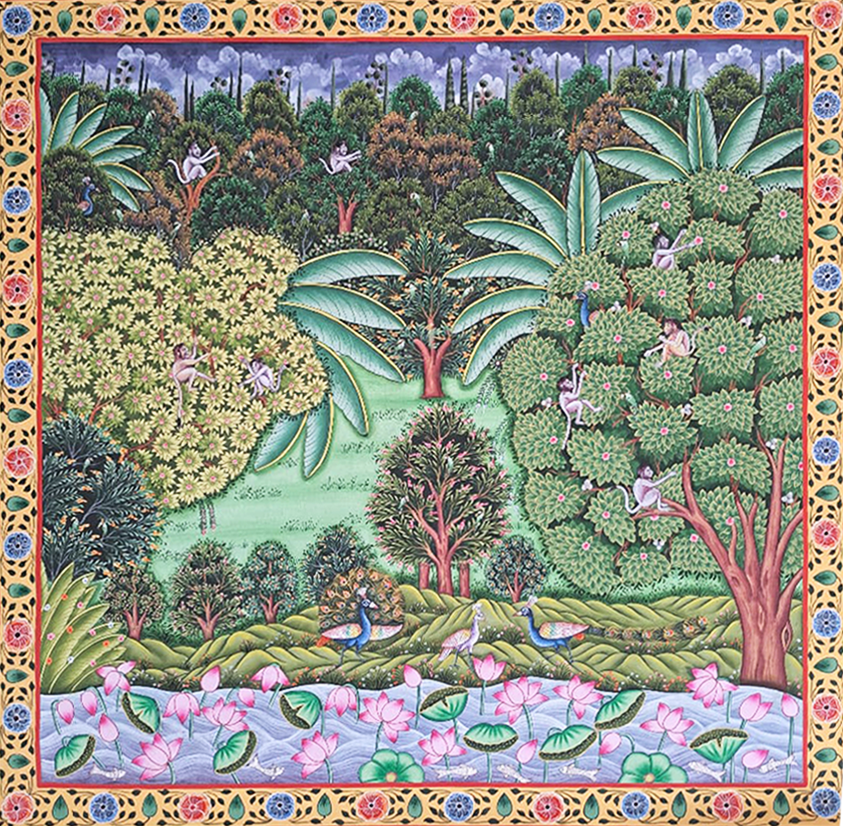
Lotus motifs are among the most recognisable elements in Pichwai paintings and symbolise purity, beauty, divinity and spiritual awakening. Kamal Talai or Lotus Pond Pichwai paintings often depict blooming lotus flowers surrounding Shrinathji, Krishna, cows or temple scenes.
The rhythmic repetition of lotus motifs creates highly decorative compositions that are especially popular in contemporary Pichwai wall art and luxury interiors.
Pichwai Peacock Paintings
Peacocks in Pichwai paintings symbolise grace, beauty, celebration and monsoon abundance. Artists often depict intricately detailed peacocks alongside Krishna, lotus ponds, temple landscapes and floral motifs.
The rich colours and ornamental detailing of peacock Pichwai paintings make them visually striking statement artworks suited for both traditional and contemporary interiors.
Materials Used in Pichwai Paintings
Natural Pigments Used in Pichwai Paintings
Traditional Pichwai paintings were created using natural pigments and mineral colours prepared from organic and locally sourced materials. Artists used pigments derived from cinnabar, malachite, lapis lazuli, saffron, hartal, lac, safflower, soot, gold, silver and other minerals to create the rich visual depth characteristic of Nathdwara paintings.
Even today, many traditional Pichwai artists continue to preserve these techniques to maintain authenticity and craftsmanship.
Colours Used in Pichwai Paintings
Pichwai paintings are known for their rich and regal colour palettes inspired by temple traditions, seasonal festivals and devotional symbolism. Common colours used in Pichwai art include:
Deep blues associated with Krishna
Lotus pinks and reds symbolising beauty and devotion
Gold accents representing divinity and grandeur
Emerald greens inspired by nature and monsoon landscapes
White tones symbolising purity and spirituality
Contemporary Pichwai artists also experiment with monochromatic palettes, muted neutrals and modern tonal variations suited for luxury interiors.
Brushes Used in Pichwai Paintings
Traditional Pichwai artists use extremely fine handmade brushes crafted from squirrel, goat or horse hair to achieve the intricate detailing and miniature-style precision associated with the art form.
These delicate brushes allow artists to create fine linework, ornamental patterns, lotus petals, textile detailing and expressive decorative motifs that define authentic Nathdwara Pichwai paintings.
How Pichwai Painting is Made
The process of creating a traditional Pichwai painting is highly intricate and time-intensive, often requiring weeks or months of detailed craftsmanship. The painting process usually begins with preparing a hand-spun cotton cloth coated with starch to create a smooth painting surface.
Artists first sketch the composition by hand before carefully layering colours, decorative motifs and ornamental detailing using natural pigments and fine brushes. Gold embellishments, lotus motifs, intricate borders, peacocks, cows and textile-inspired patterns are then added with remarkable precision.
Traditional Pichwai paintings are entirely handmade and involve collaborative craftsmanship, with different artists often specialising in sketching, colouring, detailing or ornamentation. Contemporary artists continue to preserve these methods while adapting the art form into modern canvases, mixed media works and large-format statement paintings for contemporary interiors.
Famous Pichwai Artists
Shehzaad Ali Sherani
Shehzaad Ali Sherani is one of the most respected contemporary Pichwai artists from Kishangarh, Rajasthan, known for his mastery of Nathdwara and Kishangarh painting traditions. Trained under Padmashri Kripal Singh Shekhawat, his works are celebrated for their intricate detailing, devotional storytelling, and revival of traditional Pichwai aesthetics.
Jayesh Sharma
Jayesh Sharma is a contemporary Pichwai artist known for blending traditional Nathdwara motifs with refined modern aesthetics. His artworks frequently feature Shrinathji, lotus ponds, cows, and intricate decorative detailing inspired by temple traditions while adapting beautifully to contemporary interiors.
Mohan Prajapati
Mohan Prajapati is recognised for his intricate handmade Pichwai paintings rooted in the devotional traditions of Nathdwara art. His works often depict Krishna leelas, Kamdhenu cows, lotus motifs, and temple-inspired ornamentation through detailed brushwork and traditional colour palettes.
Naveen Soni
Naveen Soni is a Pichwai artist known for creating richly detailed devotional compositions inspired by Shrinathji temple traditions. His artworks combine traditional craftsmanship with elegant decorative layouts featuring peacocks, lotus motifs, cows, and intricate floral ornamentation.
Sushil Soni
Sushil Soni specialises in traditional and contemporary Pichwai paintings that celebrate Krishna devotion, temple rituals, and Nathdwara heritage. His paintings are admired for their fine detailing, harmonious compositions, and use of intricate decorative elements inspired by classical Pichwai art.
Dinesh Soni
Dinesh Soni is known for his highly detailed Pichwai artworks featuring Shrinathji, Kamal Talai scenes, cows, peacocks, and festival-inspired compositions. His paintings preserve the intricate visual richness of traditional Nathdwara art while also exploring contemporary interpretations suited for luxury home decor and collectors.
Pichwai Paintings for Home Decor
Pichwai paintings bring spiritual depth, heritage craftsmanship and timeless elegance into contemporary interiors. Their intricate detailing, rich symbolism and luxurious visual language make them ideal statement artworks for living rooms, meditation spaces and pooja rooms, hallways, bedrooms and luxury hospitality interiors.
Popular choices for home decor include:
Shrinathji Pichwai paintings
Kamdhenu and Cow Pichwai art
Lotus or Kamal Talai Pichwai paintings
Peacock-inspired Pichwai wall art
Whether styled in traditional Indian interiors or minimalist contemporary spaces, as individual masterpieces or part of a gallery wall setting, Pichwai wall art adds warmth, visual richness and cultural sophistication to homes.
Pichwai Paintings for Gifting
Pichwai paintings make meaningful and luxurious gifts for weddings, anniversaries, housewarmings, festive occasions and spiritual celebrations. Rich in symbolism and handcrafted beauty, these artworks celebrate devotion, abundance, heritage and artistic excellence.
Handmade Pichwai paintings featuring Krishna, Shrinathji, cows, lotus motifs and festival scenes are especially popular as gifts because of their spiritual significance and timeless decorative appeal. Whether gifted as collector’s artworks or statement home decor pieces, Pichwai paintings offer a unique blend of devotion, craftsmanship, and cultural heritage.
FAQs About Pichwai Paintings
What is Pichwai painting famous for?
Pichwai painting is famous for its intricate devotional compositions depicting Shrinathji, Krishna leelas, lotus ponds, cows, peacocks and temple festivals. Originating in Nathdwara, Rajasthan, this traditional art form is celebrated for its fine detailing, rich symbolism, natural pigments and miniature-style craftsmanship.
Are Pichwai paintings handmade?
Yes, authentic Pichwai paintings are completely handmade by skilled artists using fine brushes, layered pigments and intricate detailing techniques. Traditional Nathdwara Pichwai paintings are often created over several weeks or months and may include hand-painted ornamentation, gold detailing and natural mineral colours.
Can Pichwai paintings be used in modern homes?
Absolutely. Contemporary Pichwai paintings blend beautifully into modern interiors and are widely used as statement wall art in living rooms, bedrooms, dining spaces, meditation rooms and luxury hospitality interiors. Minimalist and contemporary Pichwai artworks are especially popular for modern decor aesthetics.
What do cows symbolise in Pichwai paintings?
Cows in Pichwai art symbolise divinity, abundance, purity and Krishna’s pastoral life in Vrindavan. Kamdhenu Pichwai paintings, featuring the sacred wish-fulfilling cow, are especially associated with prosperity, blessings and spiritual harmony.
What materials are used in traditional Pichwai paintings?
Traditional Pichwai paintings are usually created on hand-spun cotton cloth or canvas using natural pigments, mineral colours, gold embellishments and fine handmade brushes crafted from animal hair. Artists use intricate layering and detailed ornamentation techniques to create the rich visual language characteristic of Nathdwara art.
How do I identify an authentic Pichwai painting?
Authentic Pichwai paintingsare hand-painted and recognised for their intricate detailing, layered brushwork, symbolic motifs and handcrafted irregularities that distinguish them from digital prints or machine-made reproductions. Traditional Nathdwara Pichwai artworks often feature lotus motifs, cows, Shrinathji imagery, peacocks, decorative borders and natural or mineral pigments. Purchasing from trusted galleries and artist-led platforms also helps ensure authenticity.
Are Pichwai paintings suitable for gifting?
Yes, Pichwai paintings make meaningful and luxurious gifts for weddings, housewarmings, anniversaries, festive occasions and spiritual celebrations. Their devotional symbolism, handcrafted beauty and timeless aesthetic appeal make them especially valued as heritage art gifts and collector’s pieces.
What is the GI tag of Pichwai painting?
Pichwai painting received the Geographical Indication (GI) tag in 2022, recognising it as a traditional art form uniquely associated with Nathdwara, Rajasthan. A GI tag helps protect the cultural identity, authenticity and heritage of regional crafts and ensures that traditional Nathdwara Pichwai art is recognised for its geographical and artistic origins.
The GI recognition also supports traditional Pichwai artists and artisan communities by helping preserve indigenous painting techniques, devotional storytelling traditions, and handcrafted practices passed down through generations.
Where can I buy authentic Pichwai paintings online?
Collectors and art enthusiasts looking to buy authentic Pichwai paintings online can explore MeMeraki’s curated collection of traditional and contemporary Nathdwara artworks created by skilled Indian artists and artisans. From Shrinathji Pichwai paintings and Kamdhenu artworks to lotus-themed compositions and contemporary devotional wall art, MeMeraki brings together authentic handcrafted Pichwai paintings that celebrate the heritage, craftsmanship and timeless beauty of this iconic Indian art form.
What is Pichwai Painting? Pichwai painting (also spelled Pichhavai, Pichhvai, or Pechhavai) is a GI-tagged traditional Indian devotional art form that originated over 400 years ago in Nathdwara, Rajasthan. The... Read More




 Request Price