What is Dhokra Art?
Dhokra, also spelt Dokra, is a form of non-ferrous metal casting practised by tribal artisans across Central and Eastern India. Using the ancient lost-wax casting technique, artisans transform beeswax, clay and molten brass or bronze into sculptural figures, ranging from deities and animals to scenes of everyday tribal life. Each handmade Dhokra art piece is solid metal, individually cast and finished by hand, which is what gives this Dhokra wall art its distinctive rustic, antique character.
Unlike painted art forms, Dhokra art is sculptural by nature. It reads as much through texture and shadow as through colour, making it a striking addition to any wall or console that could use a handcrafted, three-dimensional focal point.
Key Features of Dhokra Art
- Cast entirely in solid brass or bronze using the lost-wax method
- Every piece is one-of-a-kind, since the mould is destroyed during casting
- Distinctive fine-line surface texture created by wax threading
- Warm, antique-gold patina that develops further with age
- Rooted in tribal communities across Chhattisgarh, Odisha, Madhya Pradesh, Jharkhand and West Bengal
-
Motifs drawn from folklore, deities, animals and rural life
History of Dhokra Art
Origin of Dhokra Art
Dhokra's lineage traces back more than 4,000 years to the Indus Valley Civilisation, with the bronze "Dancing Girl" of Mohenjo-daro widely regarded as its earliest known ancestor. The craft takes its name from the Dhokra Damar tribes, traditionally itinerant metalworkers who carried the knowledge of lost-wax casting across Bengal, Odisha and Central India, settling in the regions where the tradition still thrives today.
Evolution of Dhokra Art
Originally used to cast ritual objects, oil lamps, jewellery and figurines for tribal worship, Dhokra gradually expanded into decorative and narrative sculpture, capturing scenes of village life, musicians, farmers and folk deities. As demand grew beyond tribal communities, artisans began adapting the scale and finish of their work, moving from small ritual objects to larger decorative pieces suited to home display, while retaining the same hand-built, lost-wax process passed down through generations.
Contemporary Dhokra Art
Today, Dhokra artisans continue to work almost entirely by hand, even as the craft finds a new audience through home décor and gifting. Contemporary Dhokra pieces now include wall panels, decorative plates, and cross-craft collaborations, such as Dhokra figures set against hand-embroidered Kutch textile backdrops, that bring this ancient technique into distinctly modern interiors.
Dhokra Themes and Motifs
Nature in Dhokra Art
Dhokra artisans draw heavily on the natural and agrarian world around them, casting trees, leaves, and rural landscapes that reflect the farming and forest life of the tribal communities practising the craft. These nature-based pieces often carry a quiet, grounded character, built from the same lattice-like wax threading used across the art form.
Animals in Dhokra Art
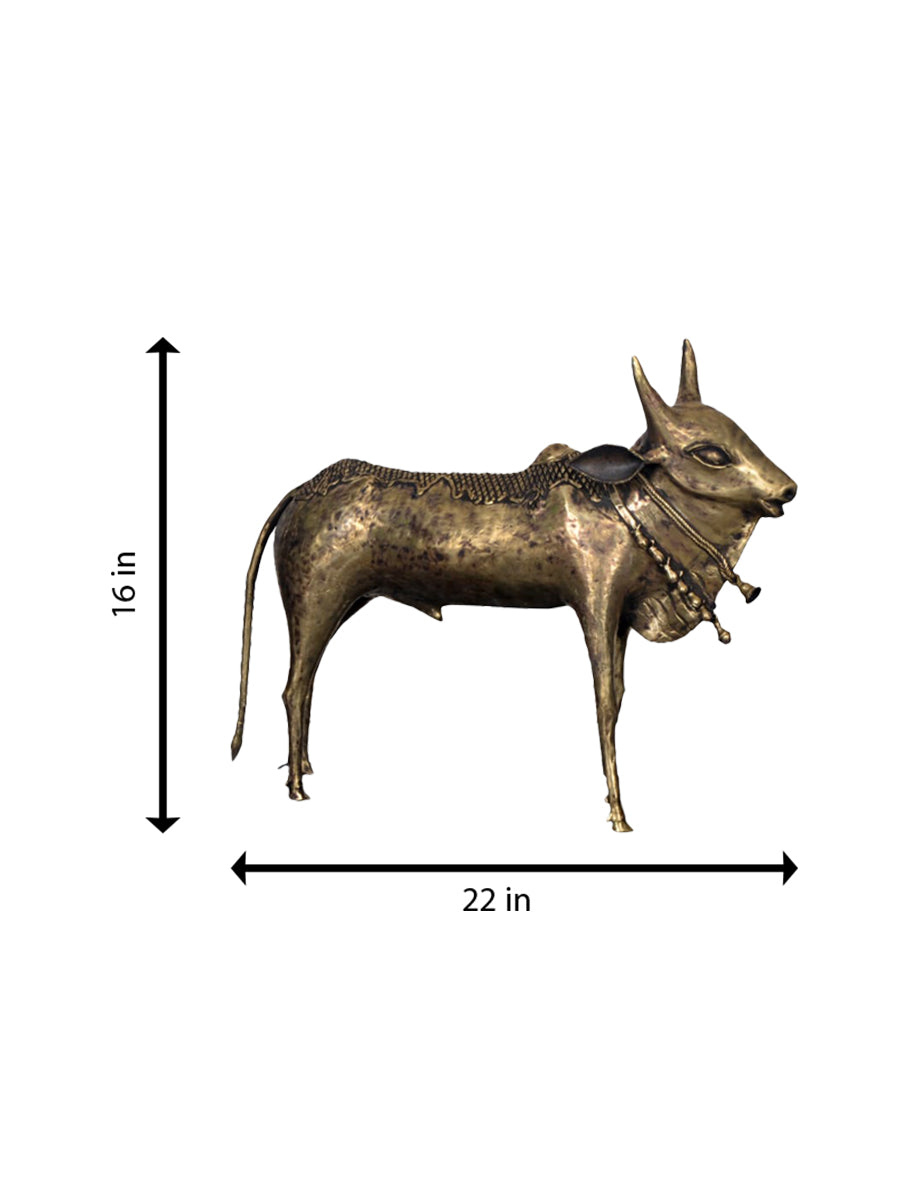
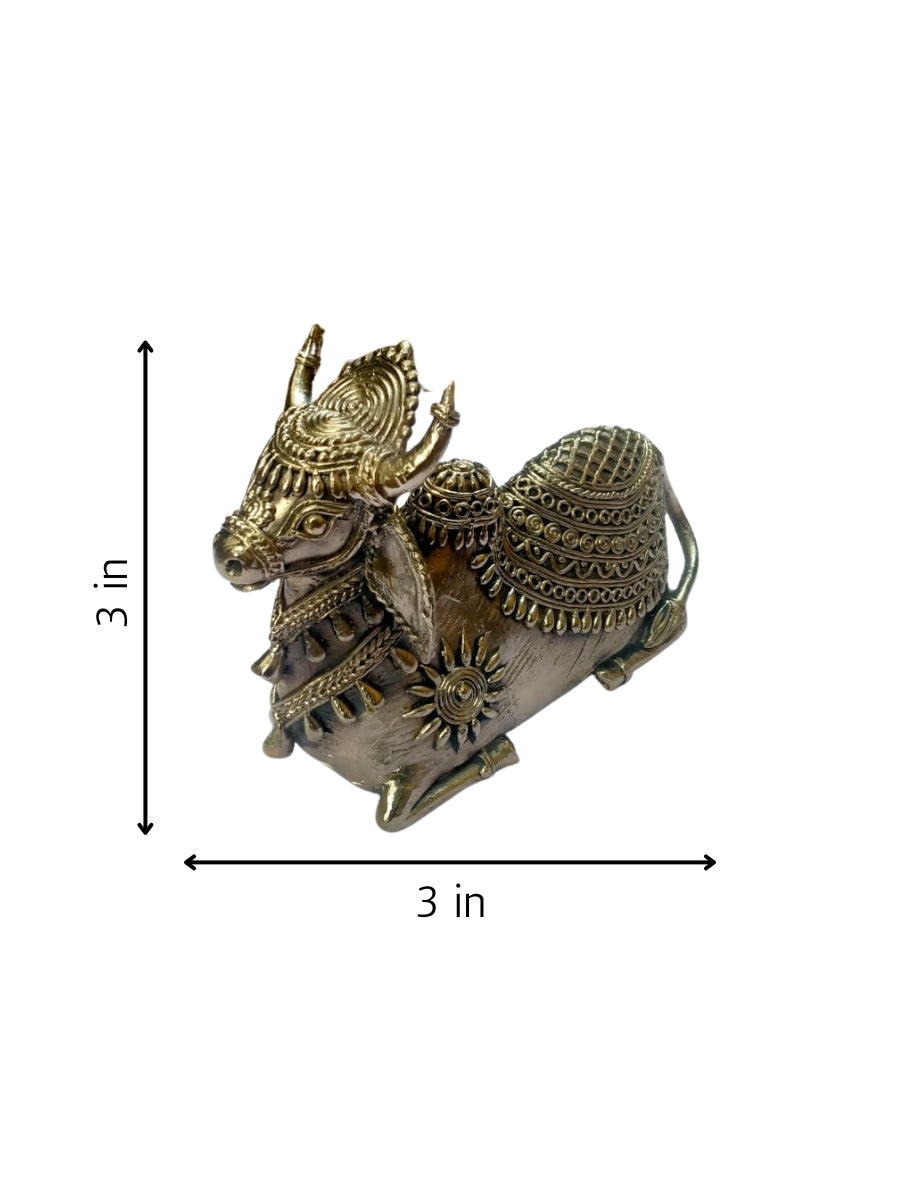
Animals are among the richest motif categories in Dhokra, cast with a stylised, symbolic quality rather than strict naturalism. The Nandi bull, sacred vahana of Lord Shiva, is one of the most popular subjects, shown reclining or standing with lifted head, arched horns and ornamental detailing such as garlands, anklets and a textile saddle cloth that echo temple icon traditions. Elephants, horses, owls, peacocks and birds also appear frequently, their bodies built from characteristic Dhokra lattice cylinders and coiled filaments that give each animal a distinctive textured silhouette.
Deities in Dhokra Art
Devotional figures form a significant part of Dhokra iconography, reflecting the craft's origins in ritual and temple objects. Ganesha is among the most requested devotional pieces, typically shown seated in a tranquil posture with a detailed crown, a curved trunk holding a modak, and one hand raised in blessing. Alongside Ganesha, tribal folk deities and ritual idols continue a lineage of devotional metal casting that predates most other Indian sculptural traditions.
People and Village Life in Dhokra Art
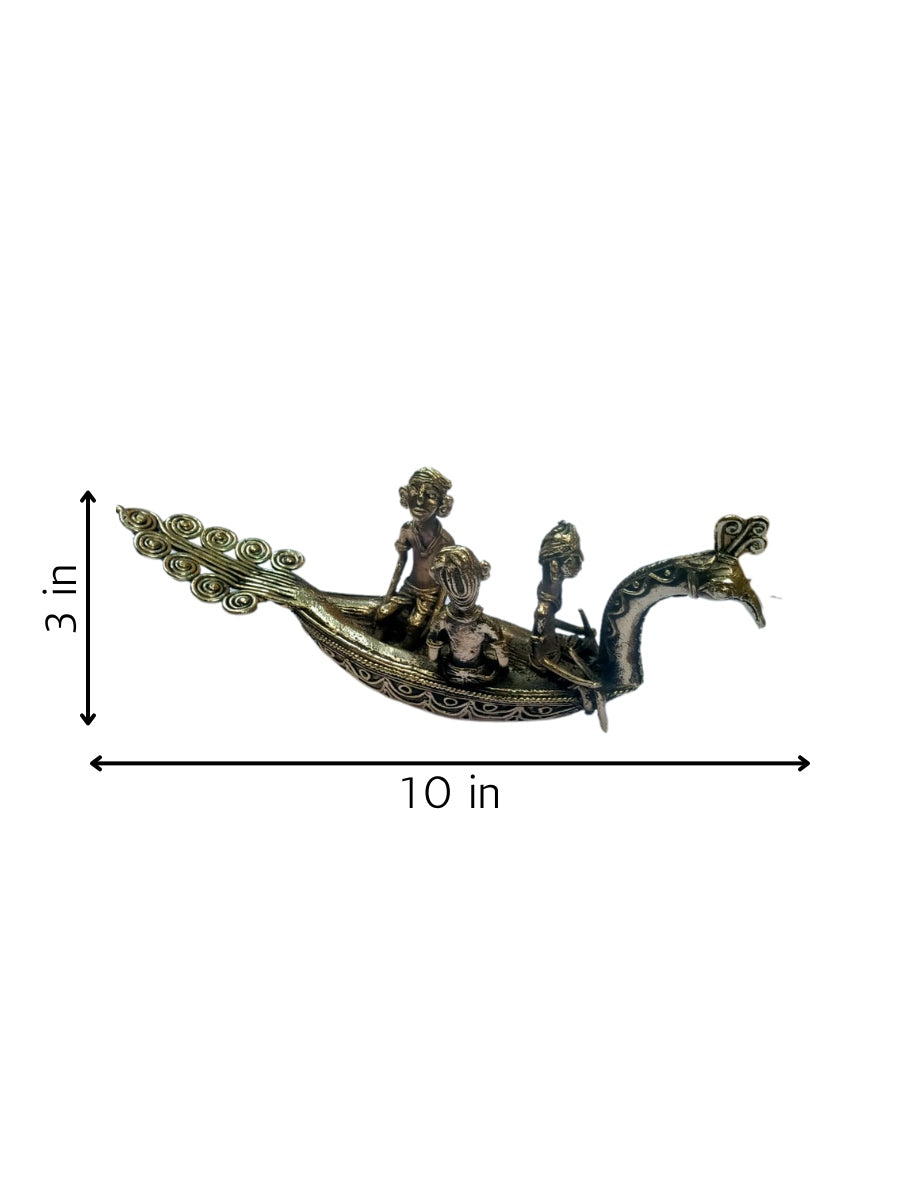
Beyond animals and deities, Dhokra artisans regularly cast human figures drawn from tribal community life, musicians playing traditional instruments, dancers in mid-movement, farmers, and scenes of everyday village activity. These figurative pieces capture the social and cultural fabric of the communities that practise the craft, continuing a storytelling tradition that stretches back to the art form's ritual origins.
Dhokra Patterns
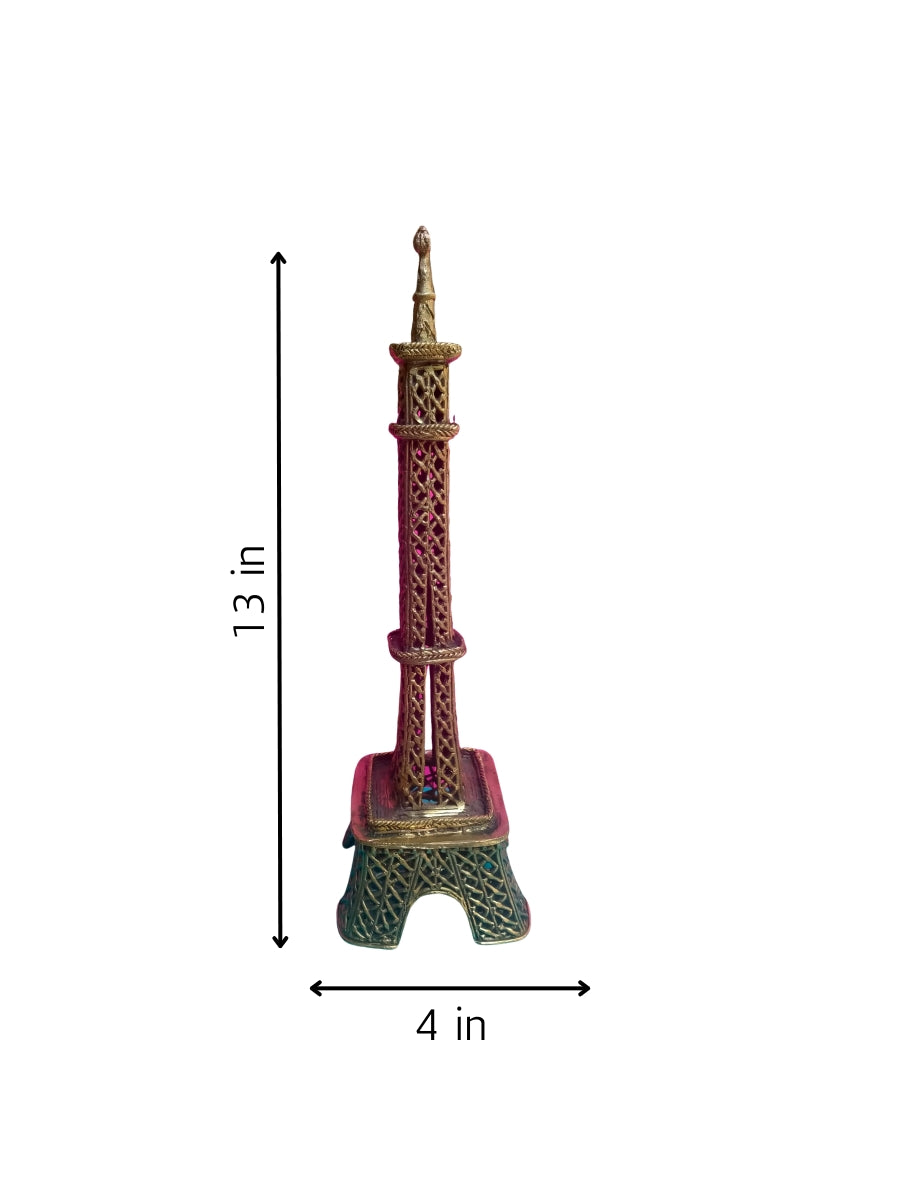
The surface of a Dhokra piece is built from fine wax threads pressed, coiled and layered onto the clay core before casting, creating the intricate linear, lattice and coiled patterns that are the art form's visual signature. This threaded texturing, combined with applied discs, bands and segmented modelling, gives every piece a rhythmic, hand-built surface quality, and since each mould is destroyed in casting, no two pieces ever repeat the same pattern exactly.
How Dhokra Art is Made
Clay and Wax
Every Dhokra piece begins with a clay core, roughly shaped into the final form. Artisans then coat this core in a layer of beeswax mixed with resin, into which they thread and press fine wax strands to build up the design's surface detail.
Metal and Finish
The wax-coated core is encased in another layer of clay mixed with rice husk and left to dry. When fired, the wax melts and drains away, "lost," leaving a hollow mould. Molten brass or bronze is then poured into this cavity; once cooled, the outer clay is broken away to reveal the cast metal piece, which is hand-finished and polished to its final antique-gold patina.
Tools and Techniques
Dhokra artisans work with simple, largely handmade tools, wooden modelling sticks, wax-threading implements and small furnaces for casting, relying on skill and experience rather than machinery at every stage. Because each mould is destroyed in the casting process, every Dhokra artwork is inherently one-of-a-kind.
Famous Dhokra Artists & Master Craftsmen
Suresh Waghmare
Suresh Waghmare is a skilled Dhokra artisan from Chhattisgarh, known for creating handcrafted metal artworks using the traditional lost-wax casting technique. His works reflect the distinctive sculptural forms and cultural narratives associated with Dhokra, while preserving the craftsmanship passed down through generations of artisan communities.
Anil Baghmare
Anil Baghmare is a Dhokra artist from Madhya Pradesh who works with traditional metal-casting techniques to create expressive handcrafted sculptures and artworks. His practice draws on the rich heritage of central India's tribal and folk traditions, translating traditional forms and subjects into distinctive Dhokra creations.
Kunal Rana
Kunal Rana is a Dhokra artist whose handcrafted brass artworks showcase the sculptural possibilities of traditional lost-wax metal casting. His collection features a diverse range of forms, from birds, fish, deer, tortoises and other animals to Ganesha, Lakshmi, Nandi, and narrative and tribal-inspired figures. Through these intricately crafted sculptures, Rana brings the distinctive character of Dhokra into contemporary home decor while retaining the expressive forms and handmade craftsmanship of the traditional art.
How to Identify Authentic Dhokra Art
Genuine Dhokra art is solid cast metal, not a plated or moulded imitation, so it carries real heft and a cool, weighted feel in the hand. Look for these signs of authenticity:
-
Weight and solidity: Authentic pieces are cast in solid brass or bronze and feel noticeably heavier than moulded or plated reproductions.
-
Surface irregularity: Because each mould is broken after a single use, genuine Dhokra pieces show small natural variations in line and finish; perfect uniformity is a sign of machine production, not hand casting.
-
Fine threaded texture: The coiled, linear surface pattern should feel raised and tactile, a result of wax threads pressed by hand before casting, not printed or embossed detailing.
-
Antique patina: A warm, slightly uneven brass or bronze tone that can deepen with age is characteristic of hand-finished Dhokra, unlike the flat, uniform gold of plated imitations.
-
Certificate of authenticity: Buying from artisans or platforms that provide provenance and artisan details, as MeMeraki does with every piece, is the most reliable way to confirm you're getting genuine, handcrafted work.
Dhokra Art for Home Décor
Gifting Guide for Dhokra Art
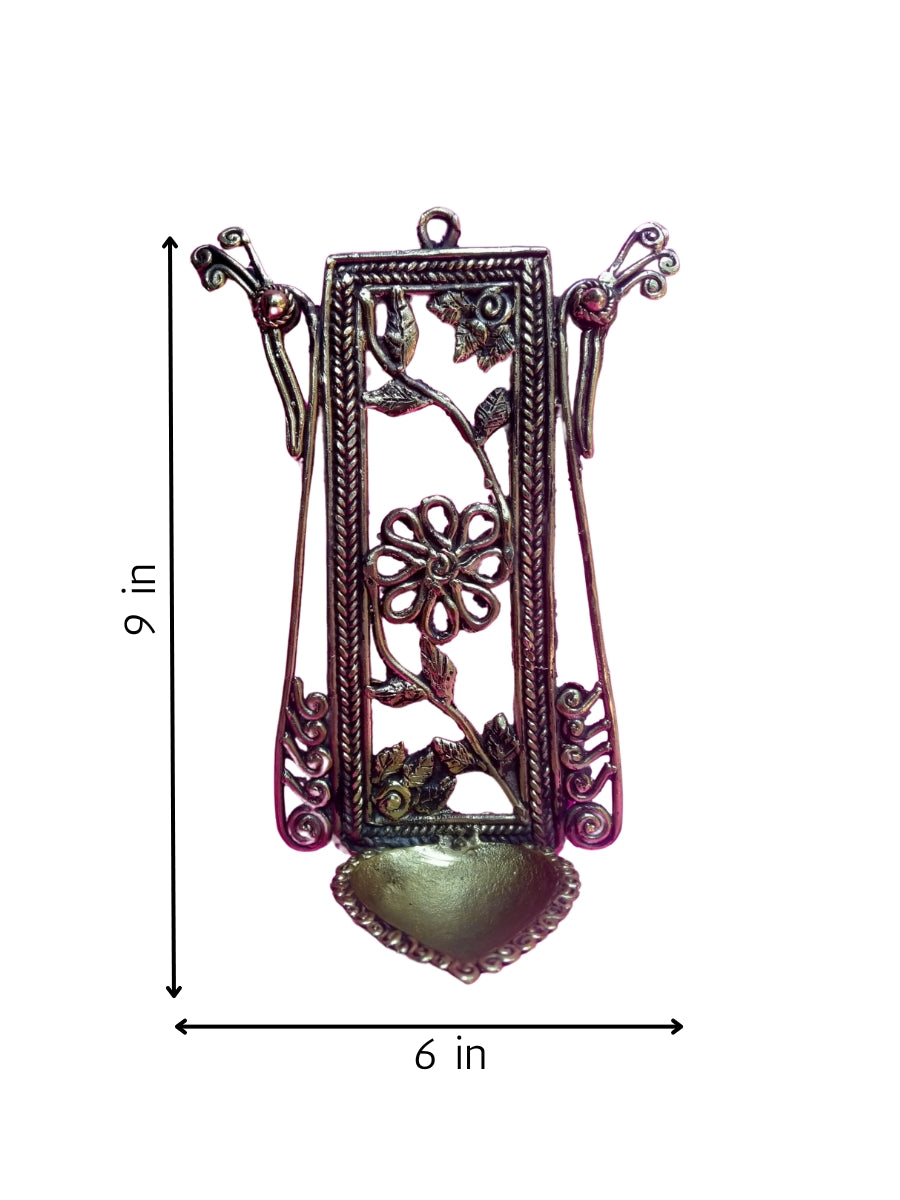
A handcast Dhokra sculpture makes a distinctive, conversation-starting gift for housewarmings, anniversaries and festive occasions such as Diwali, when diya stands and Ganesha figures are especially popular. Its rustic, sculptural quality sets it apart from a painted gift, appealing to anyone who appreciates craft history and tactile, handmade objects.
FAQs About Dhokra Art
1. What is Dhokra art?
Dhokra, also spelt Dokra, is an ancient Indian metal-casting craft made using the lost-wax technique. Artisans build a wax model over a clay core, encase it in another layer of clay, then melt out the wax and pour in molten brass or bronze to cast the final piece.
2. How old is the Dhokra art form?
Dhokra is one of the oldest continuously practised crafts in India, with roots tracing back over 4,000 years to the Indus Valley Civilisation, including the famous bronze Dancing Girl of Mohenjo-daro.
3. Is Dhokra art durable for everyday display?
Yes. Cast in solid brass or bronze, Dhokra pieces are sturdy and long-lasting. Occasional dusting is enough to maintain their finish, and they hold up well as both indoor sculptures and wall-mounted pieces.
4. Are these Dhokra artworks handmade?
Yes. Every piece in this collection is individually hand-cast by tribal artisans using the traditional lost-wax process, which means no two pieces are ever perfectly identical.
5. Can I buy Dhokra art online from MeMeraki?
Yes, this collection lets you buy Dhokra art online across multiple regional styles, motifs, and price ranges, including cross-craft pieces combining Dhokra with Kutch embroidery, with worldwide shipping and an authenticity certificate included with every purchase.
6. Does Dhokra art make a good gift?
Yes. Its rustic, sculptural character makes it a distinctive gift for housewarmings, anniversaries, and festive occasions like Diwali, whether given as a single sculpture or paired with other pieces in a gallery wall set.